
Stories and news
Pierre Vincent doubles his vineyard: 6 hectares in Meursault
The Pierre Vincent domaine doubles its Burgundy vineyard with 6 hectares in Meursault, acquired with partners on August 17, 2026 after the spring contact.
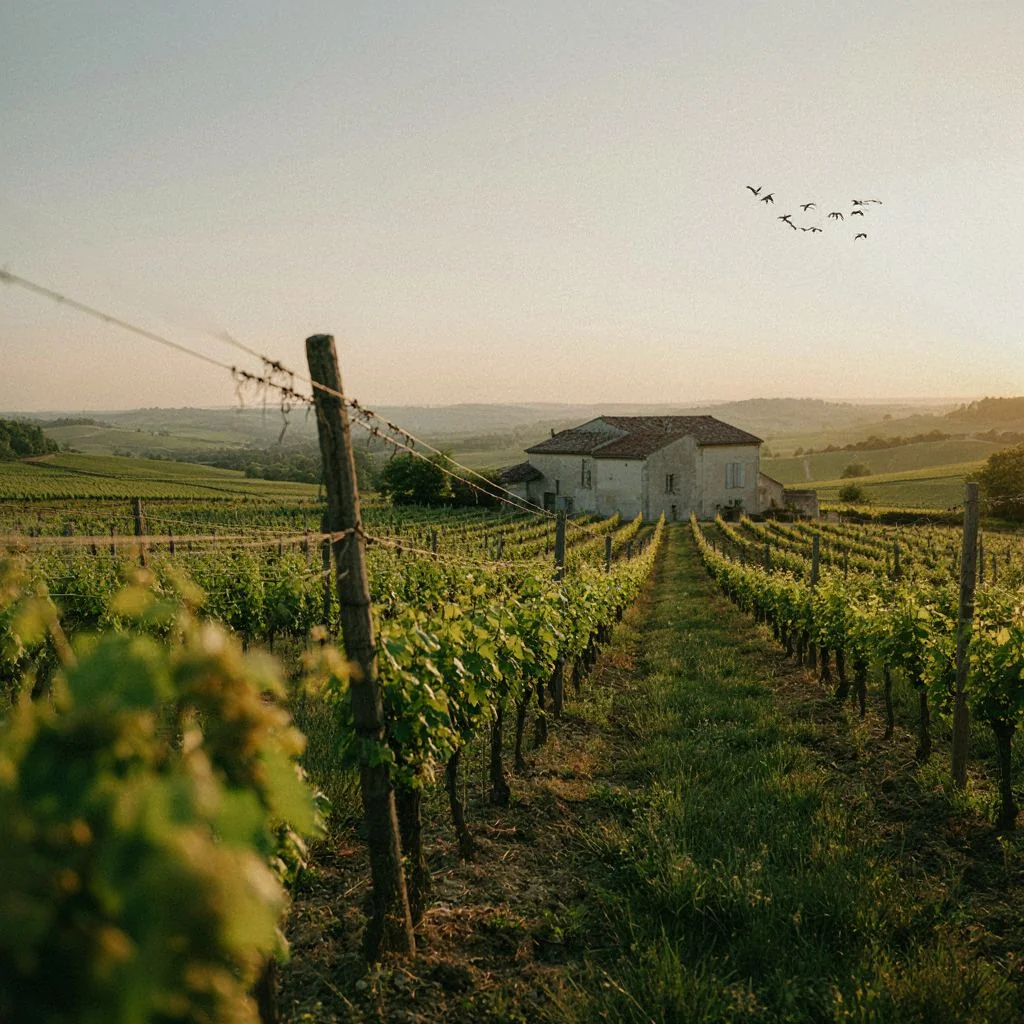
The Pierre Vincent domaine has announced the acquisition of a new 6-hectare estate in Meursault, in the Côte de Beaune. The deal was carried out together with partners Hervé Kratiroff and Eric Versini. The land available to the house doubles. The house was born in 2023 in Auxey-Duresses with the takeover of the Terres de Velle domaine. Six hectares in the Côte de Beaune bring with them some of the most sought-after appellations in the region. The parcels acquired include Corton-Charlemagne, Chassagne-Montrachet, Puligny-Montrachet, Meursault, Savigny-Lès-Beaune, Volnay, Auxey-Duresses and Monthélie.
A lightning deal closed on the first day of harvest
The negotiation moved fast. The first contact dates back to last spring; the deal was finalized on August 17, the same day the harvest began. It is no coincidence: in Burgundy, buying opportunities arise when the seller decides to exit. Those who want to grow must be ready to close during the season. The doubling comes from a declared choice, not from lucky circumstance. Vincent recounts that, faced with the small 2024 harvest and the difficult conditions of recent vintages, the trio made it known that they were interested in growing further, precisely to avoid being trapped in reduced volumes.
Once the Burgundy vineyard counts, the sales model changes too
Pierre Vincent’s path explains why the deal makes sense. A trained oenologist, he made wine from 2006 to 2016 at domaine de la Vougeraie, in the Boisset group. In 2010 and 2014 he was awarded in London as best red wine winemaker at the International Wine Challenge. From 2017 to 2024 he led the cellars of domaine Leflaive, in Puligny-Montrachet. In 2026 he worked on his twenty-fourth vintage, although he admits he was not predestined to become a vigneron. The partners were two enthusiasts who dreamed of owning vines in Burgundy. Kratiroff and Versini had known him for a long time. The idea of the domaine matured together with them.
When the trio took over Terres de Velle in 2023, the domaine had a quality portfolio of parcels but sold almost everything to the négoce, without achieving sufficient value. Vincent rebuilt his own distribution network. Today the entire production is sold in bottle, about 60,000 bottles. The target is 80,000 in a normal year. Selling in bottle rather than in bulk to the négoce was the first real turning point. The new vineyard fits exactly into this strategy. It adds prestigious white appellations to an already broad range.
What buying vines does not guarantee
It is worth dismantling a widespread simplification: doubling the surface area does not mean immediately doubling the bottles, let alone the revenues. The vines just acquired in Meursault largely come under fermage, that is agricultural tenancy, with lease contracts renewed for 25 years. The Pierre Vincent domaine bought the management company and the cellar, not full ownership of every parcel. It is a different scheme from that of Terres de Velle, where the group had taken over buildings and vineyard land directly. It means having agronomic and commercial control, but with a contractual structure to manage over time.
The second clarification concerns the method. Vincent is already committed to organic farming and relies on agronomy and biodynamics to adapt production to climate change. One of the strategies also involves higher canopies on the vines. The farming method drives quality, but does not protect against a small vintage. The 2024 harvest proved this across the whole Côte de Beaune: not even the most sought-after sites are immune to reduced volumes. Those who buy or list these wines must read the growth for what it is, an investment in appellations and supply chain control, not a promise of quantity.
What remains at stake after the doubling
The deal also includes an activity that many observers tend to overlook: the grape purchasing under négoce started by Jean-Philippe Fichet, which until now represented about 8,000 bottles. The Pierre Vincent domaine intends to continue and develop it, adding a flexible source of supply alongside its own vineyard. The 8,000 bottles of purchased grapes provide flexibility in difficult vintages. In this region the surface area is fixed and volumes fluctuate. This dual structure matters as much as the appellations acquired.
The coming seasons will tell whether the model holds. The goals are clear. The first is to bring production towards 80,000 bottles in a standard year. The others are to progressively convert the new parcels to biodynamics and maintain full sale in bottle. The questions that decide the outcome remain open. The first is the handling of the fermage contracts, the second the performance of a new portfolio of parcels for those who work it. The third is the ability to sell top-level appellations in a market that does not forgive. For a domaine born in 2023, the doubling is a bet on its own maturity, not a destination.
Sources: