
Stories and news
Jancis Robinson on Georgian Wine: Tradition Meets Modern Ambition
Jancis Robinson, the most authoritative British critic in the wine world, has devoted an extensive article to Georgian wine entitled "Georgia - no lack.
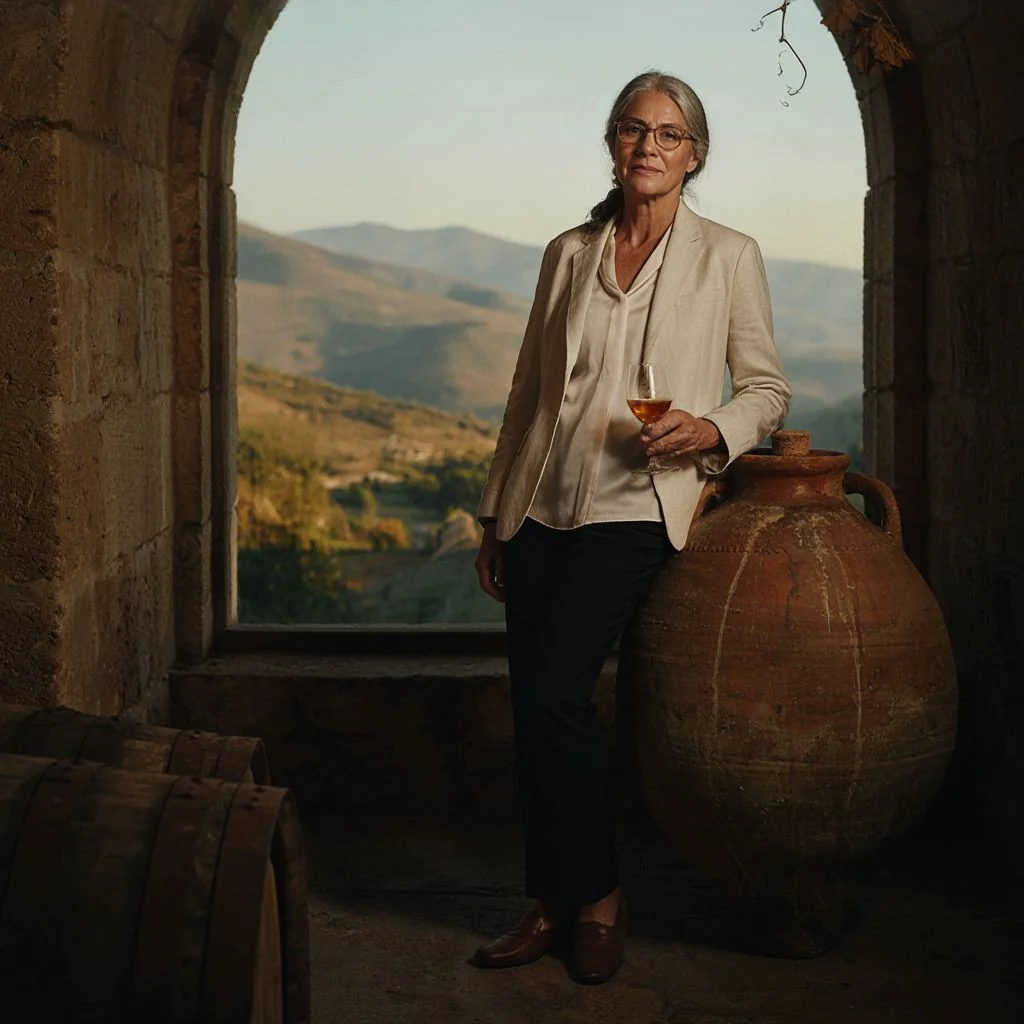
Jancis Robinson, the most authoritative British critic in the wine world, has devoted an extensive article to Georgian wine entitled “Georgia - no lack of tension”. The text goes beyond history and oenology: it places Georgia’s wine culture within the political, cultural and ideological context of the present. For European importers and sommeliers it is a useful read. It helps to read the bottles with greater awareness. These bottles have been crossing the cellars of natural wine for a few years now.
The summary of the piece comes from importer Olivier Sauvageon: “8,000 years of history, 30 years of experience”.
Robinson: the paradox between tradition and modernization
The starting point of the article is symbolic: the Alaverdi monastery, a place where wine and spiritual life have been inseparable for centuries. To Robinson, wine master Julia Harding describes the country as follows: Georgia has the unique ability to welcome opposing realities at the same time. These realities are deep religiosity and tolerance, fidelity to traditions and creative freedom. They also include national pride and openness to the world.
It is the paradox that gives the piece its title. On one side lives a winemaking tradition 8,000 years long, on the other there is a debate about what the future of Georgian wine should be. Staying faithful to traditional methods or adapting to international standards to compete on global markets.
Two poles: Irakli Gilauri and Douglas Wregg
Robinson embodies this tension in two figures. The first is Irakli Gilauri, who, with international consultants, aims to create a premium-class Georgian wine. His thesis is this: Georgian wine does not yet reach the highest world standards. The idealization of the qvevri tradition is often a historical consequence rather than a conscious choice. The industry must free itself from dependence on the Russian market and seek international recognition with high-quality dry wines. His brand is called “Resistance”, and the name is also a political statement. The red, on the other hand, reflects the Bordeaux school.
The opposite pole is Douglas Wregg, a British importer of natural wines and representative of Les Caves de Pyrène. For him, Georgia is a conquest of the qvevri tradition: wine is an organic part of daily life, hospitality and national identity. Wregg insists on the unique texture of the amphora wines. He also insists on the long skin contact. He underlines a taste profile that has no comparison in the rest of the world.
The 2006 embargo and the hundreds of native grape varieties
In the article, an important chapter is devoted to the Russian embargo of 2006. That hard blow to the Georgian industry turned out, in perspective, to be an incentive for improvement, pushing the sector towards new export markets. From that period date the rediscovery of local varieties, research into the genetic diversity of the vineyard and a new phase of international promotion.
Robinson also gives weight to the ampelographic heritage: Georgian native grape varieties number in the hundreds, and producers are increasingly actively valuing them. For those selecting Georgian wine on European markets, this biodiversity is the resource that is hardest to replicate elsewhere. It is the concrete argument to bring to the forefront, alongside the history of qvevri.
”8,000 years of history, 30 years of experience”
The summary of the piece comes from importer Olivier Sauvageon: “8,000 years of history, 30 years of experience”. Qvevri wine remains the symbol of Georgian cultural identity. But contemporary winemaking is not reducible to tradition: in Georgia opposing philosophies coexist, that of the historical heritage and that of international competitiveness. For the Italian market, where knowing this dual soul determines the bottled selection, it is the phrase to keep in mind.
Sources: