Stories and news
Evolution of the Wine World: Maps, Climate Change and Conversation
The celebrated "The World Atlas of Wine", a project started by Hugh Johnson in 1971, confirms itself as a fundamental guide in this evolving sector.
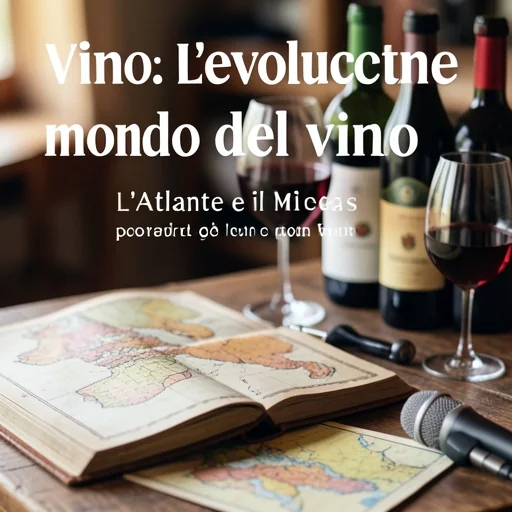
The global panorama of wine is in constant change, shaped by environmental changes and new consumption habits. This transformation requires a rigorous analysis of concrete data. It also requires an open dialogue to understand new trends. This reflects the evolution of the wine world on multiple fronts. It is a sector where consolidated knowledge and informal debate meet, both essential to decipher future directions.
Ha parlato dell’Almanacco Chianti Classico 2026/2027, della gestione del successo e del “turismo post-alcolico”.
The Wine Map is Redefined
The celebrated “The World Atlas of Wine”, a project started by Hugh Johnson in 1971, confirms itself as a fundamental guide in this evolving sector. Its ninth edition, updated with changes occurring since 2019, meticulously integrates the profound transformations induced by climate change and the rapid development of winemaking. This revised edition is the result of three years of work. Jancis Robinson and Julia Harding produced it. They painstakingly reviewed every detail, from the text to the maps, from climate data to photographs. The Atlas, with millions of copies sold and translated into 16 languages, is a mainstay of wine literature. But its constant updating underlines how even the most authoritative sources must adapt to emerging reality.
One of the central themes of this new edition is without doubt climate change. The rise in average temperatures, increasing water scarcity and ever more unpredictable weather conditions directly affect vineyards and wine production globally. Consequently, the geography of viticulture is undergoing a significant transformation, with the world of wine expanding toward the poles. Some regions were poorly associated with wine production. Until recently they had no potential. Now they are gaining real potential, indicating a clear shift of traditional production areas. This dynamic is a constant topic of discussion. It is debated among industry operators. They seek to decipher the long-term implications of such phenomena.
New Territories and the Debate on the Evolution of the Wine World
The Atlas’s updated maps vividly illustrate this geographic shift. Of the 240 total maps, as many as 15 are completely new, including a detailed map of northern Europe vineyards, a clear indicator of expansion toward cooler climates. For the first time, detailed maps have been dedicated to regions such as Valtellina, Santorini, Crete, the Azores, Aragon and Calistoga, highlighting their growing importance. Many older maps have been expanded. They have been made more detailed. They include those relating to the wine regions of Muscadet, Rioja Alavesa, Lisbon and the State of Washington. These cartographic updates reflect a wine reality in constant expansion and redefinition.
The Atlas provides a structured and authoritative database. It concerns climate change and its effects. The debate on these themes also takes place in less formal contexts. The “Miles” podcast proposes a more casual approach. The script is often disregarded and discussions deviate. There is no predefined theme or fixed guest. This mode, while appreciated by part of the audience, is criticized by others who find it full of chatter with little focus on topics. the most recent episode touched on various subjects. It spoke about the Chianti Classico Almanac 2026/2027, the management of success and “post-alcohol tourism”. This demonstrates the breadth of interests in the sector. The average of about 600 listens per episode of the podcast raises questions about audience satisfaction. But it confirms the search for a less structured dialogue about wine.
From Classic Guides to Open Conversations
This dynamic in the podcast contrasts with the Atlas’s rigorous approach. In the Atlas every word was rechecked. Many texts were rewritten or integrated with new data, often thanks to contributions from local experts. The Atlas represents consolidated knowledge, while the podcast embodies the sector’s fluid conversation. The experience of the Brisighella live, described as “beautiful,” even opened up the possibility of a future tour “like a real boy band,” hosted by associations or consortia, an idea that underlines the search for new forms of engagement and interaction with the wine community.
Wine guides are updated with new editions, like the Atlas. They are often at the center of “tantrums.” The “tantrums” come from those who no longer receive the compliments they once did, according to the podcast. This detail reveals a certain resistance to change in the sector, where hierarchies and established reputations are questioned by emerging new realities. The podcast has an unscripted approach. It is open to new forms of interaction. This suggests the willingness to explore new modes of engagement with the public, in contrast to traditional publications, albeit updated. The dichotomy between the structured approach and the informal one is evident.
These two approaches, one analytical and the other conversational, reflect the different needs of the wine world. On one hand, the need for precise data to understand climate change and new wine geographies. On the other, the desire for an open and less formal confrontation on trends and opinions. Both contribute to shaping the understanding and experience of wine in an era of profound transformation, indicating that the future of the sector will depend as much on the ability to adapt to scientific facts as on the willingness to openly dialogue about them.
Sources: