
Stories and news
Moët Hennessy's AI detects wine defects, 99% accuracy on ACF
Moët Hennessy, Analog Devices and UC Davis built a machine with chemical sensors and AI that spots wine defects early, starting with Champagne's ACF.
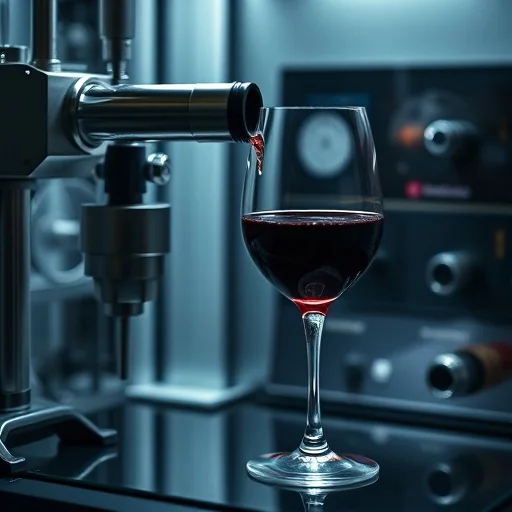
Moët Hennessy’s research center has developed a machine equipped with chemical sensors and artificial intelligence for wine. The machine was built together with the American company Analog Devices and UC Davis, as the Analog Devices press release of 7 October explains. It can detect the early signatures of wine defects before experts perceive them. The news, reported by Vitisphere and told in an interview with the Wall Street Journal, concerns Champagne above all. For those who import and serve wine, the case shows how the great maisons are shifting quality control from reactive tasting to prediction. In early testing the machine recognized samples at risk of Arôme de Champignon Frais (ACF) with 99% accuracy.
Moët Hennessy’s AI that Sniffs Out Wine Defects Before the Experts
The machine was trained by Moët Hennessy’s research center with chemical sensors and algorithms developed with Analog Devices. The initial target is Arôme de Champignon Frais (ACF), a defect whose glycosylated precursors appear in the grapes even before vinification. The teams subjected the machine to multitudes of must samples containing the precursors and of altered wines, until they achieved 99% accuracy.
The approach is deliberately simple. As Max Shulaker, head of the Health Solutions division at Analog Devices, explains:
Rather than asking the machine to analyze which compounds are present, we ask it to tell us whether the sample is good or bad. For many real-world applications, that is the most relevant question.
Millions of Euros Lost with the 2023 Harvest
The urgency stems from a concrete episode. ACF, which appeared in the grapes of the 2023 harvest in Champagne, can cost Moët Hennessy millions of euros in wastage. Manuel Reman, member of the executive committee in charge of research and development, said so in an interview with the Wall Street Journal.
From Reaction to Anticipation of Quality Risks
For Shulaker, the breakthrough on ACF “is merely a starting point.” The stated goal is to help winegrowers move from a logic of reacting to quality risks to a logic of anticipating them. UC Davis is taking part in the research along three directions. The first is the early detection of vine diseases. The second is the assessment of soil health. The third is the identification of alterations linked to climate change, such as the effects of wildfire smoke. The background figure is heavy. Wildfire smoke cost the California wine industry nearly 4 billion dollars in 2020. Ben Montpetit, head of the university’s Department of Viticulture and Enology, recalls this.
What the Test Really Guarantees and What It Does Not
A widespread oversimplification needs to be dismantled. The machine does not analyze or list the chemical compounds present. It answers a binary question: good or bad. Its accuracy is measured on ACF and on the samples used in training. It therefore does not guarantee an analytical diagnosis of the defect, nor a verdict automatically transferable to other defects, other grape varieties or other regions. The 99% accuracy applies to the tested perimeter, not to wine in general. And the judgment remains a screening tool that accompanies tasting, not one that replaces it.
Analysis Times Still Long
The operational limit is concrete: the analysis takes about two hours per sample. A delay too long even for Krug, which has to process 300 samples, while Moët & Chandon has to process several thousand, Reman points out. Analog Devices tells the Wall Street Journal that its models become more efficient as they are trained. The bottleneck is declared temporary. For the average producer, the practical indication remains not to expect immediate technologies, but to monitor the precursors in the grapes, where the defect is born.
Sources: