
Stories and news
Grapevine Trunk Disease: How Politics and Data Guide Wine Buyers
Coralie Dewasme, an engineer at Bordeaux Science Agro, analysed the effect of grapevine trunk disease on the sensory profile of wines over nine years.
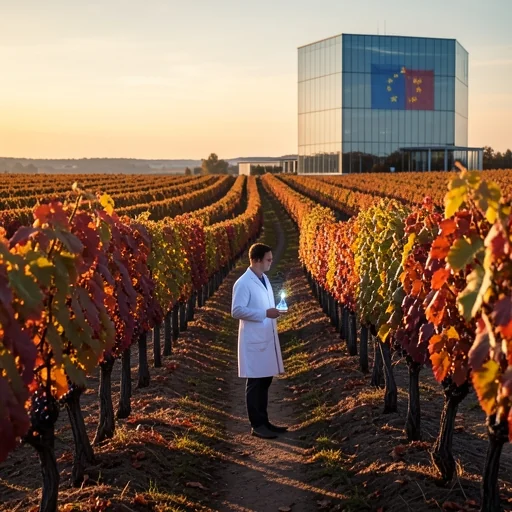
The wine sector faces challenges that weave together politics, vine diseases and commercial choices. The public career of François Patriat and the findings of research on grapevine trunk disease offer practical tools to importers, distributors and restaurateurs: political measures and scientific data both affect purchasing decisions and the long-term value of bottles.
When politics redraws the room for maneuver for the supply chain and its challenges
François Patriat has been a political figure connected to viticulture for decades. Born in Burgundy, he trained as a veterinarian. He joined the Socialist Party in 1974 and was elected general councillor of Côte-d’Or in 1976. He later served as a deputy in various legislatures. He was rapporteur for the 1999 agricultural orientation law. For a few weeks in 2002 he was Minister of Agriculture and Fisheries. His choices affected collective promotion and supports for the sector. These instruments prove useful for addressing the sector’s economic challenges. François Patriat influenced viticulture public policy.
Among the measures actually implemented, Patriat announced a package of over 20 million euros intended as emergency aid for producers in difficulty. He also contributed to the 2025 shift of a tax exemption cap on viticultural land value to 75 percent up to 20 million euros. This exemption was conditional on maintaining the activity for 18 years. The term viticultural land value indicates the tax value of land dedicated to the vine. Such fiscal and emergency levers give oxygen to investments in vineyard renewal and phytosanitary control. These are relevant elements when the disease spreads.
Fiscal measures support viticultural investments.
Patriat also revised earlier ideas. In 2011 he said he regretted voting for the Evin law, the regulation that governed advertising. According to him that law ended up limiting communication about wine. The Appel de Dijon, promoted by Patriat in 2012, defended planting rights at the European level. It is an example of political action aimed at preserving productive tools. For those who buy wine, these events explain why certain rules and incentives exist. They also show how they can mitigate or influence production challenges in the medium term.
Politics can provide practical tools to support producers and investments.
What grapevine trunk disease is and why its presence can change the commercial value of wines
Grapevine trunk disease is a fungal disease of the vine that causes the drying out of berries. The disease reduces yield and causes premature plant mortality. Coralie Dewasme, an engineer at Bordeaux Science Agro, analysed the effect of grapevine trunk disease on the sensory profile of wines over nine years. She used 30-litre microvinifications. She studied two parcels of Cabernet Sauvignon in the Margaux and Saint-Julien appellations. She evaluated the wines at 6 months, at 1 year and at 6-7 years after harvest. These stages show not only yield, but also organoleptic longevity.
The results show that at 6 months after the end of vinification there is no sensory difference between wines from healthy or symptomatic vines. After a year differences begin to emerge. The color shifts from purple to brick red or brown in wines from symptomatic vines. At 6-7 years the loss of fruit becomes evident. Tannins, the perception of sweetness and the “fatness” also diminish. This transformation reduces the wine’s ageing capability. Dewasme used expert tasters, from 11 to 23 people depending on the test. This approach makes the comparisons more robust.
The cause is physiological. Grapevine trunk disease reduces leaf surface and alters photosynthesis. This produces grapes with less sugar, less acidity and fewer phenolic compounds at harvest. Dewasme tested three different vintages, 2012, 2013 and 2015, to verify the persistence of the effect. These trials show that the effect persists even in variable climatic conditions. Grapevine trunk disease reduces ageing potential.
Translating data and politics into purchasing practices: concrete recommendations to face the challenges
For those who import or select wines, the first practical question concerns the level of risk in the vineyard. Dewasme emphasizes that the average rate of vines affected by grapevine trunk disease in France is about 3 percent. This means three vines out of a hundred, on average. Her experiment also included cuvées that were 100 percent from diseased vines as an extreme case. In commercial practice, a cuvée containing 5 percent to 10 percent of grapes from symptomatic vines will hardly be perceived by the consumer if the wine is consumed young. The problem becomes apparent in wines intended to age beyond five years.
The information to request from suppliers must be concrete. One must know the percentage of symptomatic vines in the parcel. One must know the monitoring protocols and the frequency of checks. Yield data and analyses of grape composition at harvest should be requested. Contractual clauses can be suggested, for example an obligation to declare the estimated percentage of symptomatic vines per vintage and the right to intermediate sampling. These requests make it possible to assess whether a lot is suitable for wines to be consumed young or for bottles intended to age. Request concrete vineyard health and yield data.
Health data must guide purchasing decisions.
The public policies that Patriat supported fall within the same framework. Tools such as collective promotion, emergency aid and tax exemptions make vineyard renewal possible. They also promote more widespread surveillance. However, politics does not remove the need for technical checks. Importers and restaurateurs must combine vineyard health numbers with their commercial strategy. The challenges now are to turn scientific data and political levers into contracts and operational practices. This approach protects the bottle’s value over time.
Turn scientific data and political levers into contracts and practices.
Sources: