Regions and grapes
Alta Langa Marchese Dalmasso: Piedmont's Rising Sparkling DOCG
Among the traditional method wines tasted during 2026, the Alta Langa Marchese Dalmasso confirmed itself as one of the most convincing.
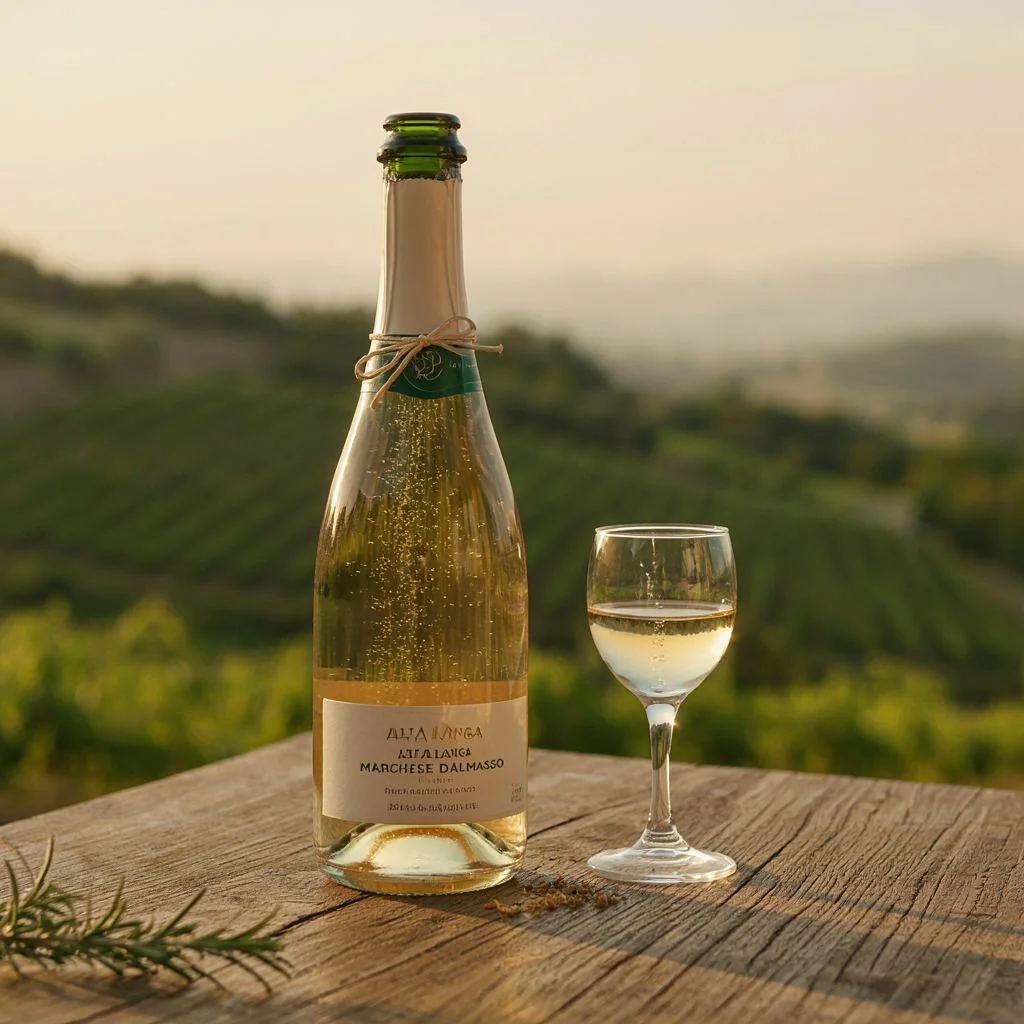
Wine Meridian published a tasting on October 12, 2026. Among the traditional method wines tasted during 2026, the Alta Langa Marchese Dalmasso confirmed itself as one of the most convincing. The tasters explain that the result matters even before the wine itself. It tells the story of an appellation that is carving out an authoritative place in Italy’s high-end sparkling wine scene. For European importers and sommeliers, it is a signal to take seriously.
The reason is historical before it is commercial. Piedmont is the region where the Italian traditional method was born, in the nineteenth century, and Alta Langa is its modern heir. The appellation is young: it obtained DOCG status in 2011, with some of the strictest rules in Italy.
What one of Italy’s strictest sets of rules really means
The rules of Alta Langa leave no room for interpretation. Only Pinot Noir and Chardonnay, only traditional method, only vintage wines. The wine must rest at least 30 months on the lees and the vineyards must stand on hills, above 250 meters of altitude. Here altitude is not a marketing slogan: it is the condition that allows the grapes to keep their acidity and aromas intact.
With a changing climate, that 250-meter threshold is worth more than it was yesterday. For years Alta Langa remained a secret shared among a few enthusiasts. Today, according to Wine Meridian, it is one of the most credible answers Italy can offer to those seeking high-end sparkling wine. Those who select sparkling wines for restaurants or distribution find in the strict rules a guarantee of consistency. The mandatory vintage means every bottle declares its year. The 30 months on the lees impose a time structure that few appellations require.
A traditional method wine with personality that does not try to resemble anyone else.
One frequent ambiguity must however be cleared up on the professionals’ table: strict rules guarantee compliance with the rules, not quality in the glass. The traditional method, on its own, says nothing about the final outcome; the grapes, the vintage and the work in the cellar do. The Marchese Dalmasso convinces because the three conditions coincide, not because the method replaces them. It is the distinction that counts when evaluating a price list: the vintage and the 30 months on the lees are a starting point, not a verdict.
Marchese Dalmasso: Alta Langa Marchese from Pinot Noir and Chardonnay on the highest hills
The Alta Langa Marchese Dalmasso is made from Pinot Noir and Chardonnay grown on the highest hills of Piedmont, on marl and limestone soils. After the first fermentation in steel, the wine rests 30 months on the lees in the bottle. The period is at the minimum limit of the appellation. The 2026 tasting describes the results as full.
In the glass it shows a pale, luminous gold color, with a fine bead that rises without pause. The nose opens on pink grapefruit and ripe pear. Then comes a hint of small red fruits. The tasters call this hint the signature of Pinot Noir. After a few minutes, the notes of the long rest on the lees emerge: brioche, pastry, a touch of pine nut. On the palate the balance stands out. The acidity gives momentum and rhythm. The mousse is silky and fills the mouth without attacking it. The sip closes with a citrusy trail that invites the next glass.
In the cellar, the pairing put to the test was vitello tonnato, a dish of the Piedmontese tradition. The counterpoint worked: the rich, savory sauce found in the bubbles and acidity the counterweight that cleansed the palate with every bite. The wine’s pastry notes conversed with the softness of the sauce. An entirely Piedmontese match, and a practical indicator for the wine list: rich, savory regional cuisine is the natural territory of this sparkling wine.
Behind the bottle: a supply chain looking ahead
Behind the Alta Langa Marchese Dalmasso stands Mack & Schühle Italia, one of the most dynamic wine companies in the country. The headquarters are in Santeramo in Colle, in Puglia. The company works with wineries in the most suitable territories. It also relies on a network of more than 5,000 growers across Italy. No single region could guarantee this sourcing strength on its own.
What stands out most, according to the Wine Meridian tasting, is the ability to look ahead. Mack & Schühle Italia is among the very few Italian companies producing still and sparkling no-low alcohol wines. It has the expertise needed to make them. It also has the required production capacity. It has then built the Genevitis project, a supply chain model involving six regions. Abruzzo, Campania, Lazio, Piedmont, Puglia and Sardinia take part in the project. Each region has a historic cooperative winery representing hundreds of grower families.
Altitude is not a slogan: it is the condition that makes it possible to have grapes with preserved acidity and aromas.
For a European buyer, the model counts as much as the wine. A multi-regional supply chain with stable cooperative bases offers supply continuity and territorial traceability. These two variables weigh in import negotiations as much as the sensory profile. Alta Langa remains the heart of the story. It is a DOCG appellation born in 2011 that has grown in silence. In 2026 it proved it can stand on the podium of Italian sparkling wine. The rest, the network of 5,000 growers, the six Genevitis regions, the alcohol-free wines, tells where the company intends to go. The appellation, meanwhile, has already shown how far it has come.
Sources: