
Regions and grapes
Resilience in viticulture: financial and adaptation strategies
The global agricultural sector is undergoing profound changes, with extreme weather events and rapidly evolving market dynamics forcing new adaptation strategies.
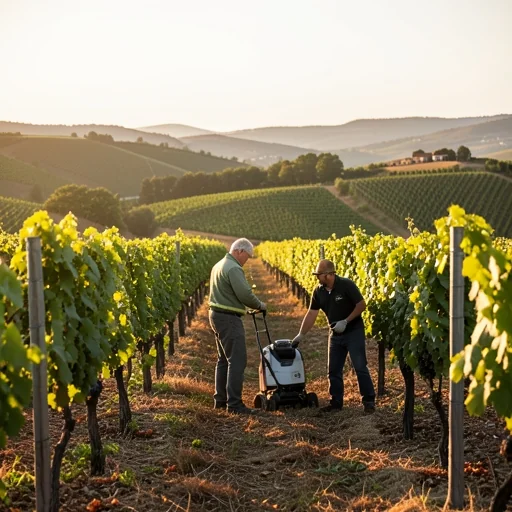
The global agricultural sector is undergoing profound changes, with extreme weather events and rapidly evolving market dynamics forcing new strategies. Viticulture, an economic and cultural cornerstone in many regions, is not immune to these pressures. Today, wine producers face a complex landscape. This includes risks and opportunities. They must seek solutions to ensure continuity and profitability of their operations. All this happens in a context of growing uncertainty. Adaptation Strategies are essential, requiring an integrated approach that combines financial support with innovation and structural adaptation, and viticulture will be at the heart of these efforts.
In South Australia, the engine of the nation’s viticulture, 72% of wine businesses reported losses in the last campaign.
The Urgency of the Crisis and the Immediate Response
Natural disasters can strike with unexpected force, leaving behind significant damage and the need for an immediate restart. Cédric Moussé is a winemaker in Cuisles, in the Marne. He suffered an estimated loss of over €10 million. This occurred after a fire on July 26. The fire, caused by a faulty photovoltaic panel, destroyed two-thirds of his precious stock of champagne and essential equipment, highlighting a vulnerability often overlooked. The insurance indemnity process in such cases can take years, testing the company’s survival.
Faced with these emergencies, financial institutions have activated liquidity support measures. Banque Populaire offers treasury loans. The rate is exceptional, capped at 2.5%. This is well below market rates for short-term loans. Crédit Mutuel Alliance Fédérale proposes treasury loans. The maximum rate is 2.5% for a period of up to five years. A 0.5% bonus is offered to young farmers. These initiatives aim to provide immediate breathing room, allowing farmers to cover current expenses and plan the next campaign.
Alongside bank support, the strength of community solidarity emerges. Cédric Moussé received over 10,000 messages of support and 200 offers of help for pressing, a concrete example of how the sector mobilizes. However, unions’ calls for full bank payment suspensions, so-called “banking white years,” are handled with caution. Banks adopt a case-by-case approach, as explained by Crédit Mutuel. An indiscriminate deferral would only postpone the problem. The debt balance would become more burdensome and could “downgrade the client’s file.”
Adaptation Strategies and the Need for Resilience in Viticulture
Beyond immediate crises, the wine sector faces long-term structural challenges that require careful planning and resilience in viticulture. In South Australia, the engine of the nation’s viticulture, 72% of wine businesses recorded losses in the last campaign. Prices for shiraz or cabernet sauvignon are low. They barely cover half of production costs. This is due to hyperspecialization and market shocks, such as Chinese surcharges. This situation pushed the regional government to intervene with a support plan of €68 million.
This Australian plan allocates 92% of the budget. Funds go to state-guaranteed loans. There is a cap of €310,000 per beneficiary. Two years without interest are planned, followed by a rate of 7.2%. The goal is to encourage diversification toward more profitable crops suited to local climatic conditions, such as olives, citrus, pistachios, and avocado. The report’s author, Sanoop Varughese, emphasizes that the difficulty does not lie in identifying alternatives, but in overcoming the “structural, financial and informational barriers” that hinder producers’ conversion.
In France, adaptation also manifests through the modernization of farming practices. Jérôme Corsin, a winemaker from Beaujolais, completed a project. He converted pruning from goblet to cordon to mechanize 14 hectares. His sister considered it “mad,” but now recognizes it as necessary for profitability. Cyril Camus, a grower in Charente, invested. He bought new equipment, such as a Pellenc machine for harvest. He also purchased Kress “fingers,” which clean vine rows. These investments reflect a clear trend toward labor optimization and reducing operating costs in a context of squeezed margins.
The Role of Financial Support and the Sector’s Evolution
Financial support goes beyond simple cash management, touching on debt restructuring and investment capacity. The RDRTEA mechanism is a key instrument. Its full name is Prêt de Réaménagement des Dettes et le Renforcement de la Trésorerie des Exploitations Agricoles. It was signed in 2025 and 2026 and is guaranteed by BPI France. Although initially it did not achieve the hoped-for success due to overly restrictive criteria, these were later relaxed. Banks, such as Crédit Mutuel, consider it a “last resort” solution, as it imposes constraints on farmers’ future borrowing capacity.
The French state has established INAF. This supports future investments and risk prevention. INAF stands for Initiative Nationale pour l’Agriculture Française. It offers an 80% free guarantee on loans. Banks also promote the use of the “Déduction pour Épargne de Précaution” (DEP), which allows setting aside funds in good years to use in case of unforeseen events. Banks maintain careful oversight not only of winegrowers but of the entire supply chain, including cooperatives and traders, recognizing that risk is shared and a failure of one link in the chain has wide repercussions.
Fatigue and weariness among winegrowers are growing perceptions, fueled by years of repeated crises. Maryse, Jérôme Corsin’s mother, recalls how in the past, when facing sales difficulties, they organized “Tupperware tastings” to reach customers directly. These creative solutions, often passed down through generations, show the constant need to adapt to changing markets and demand. Banks are aware of this fatigue. They must guide clients toward diversification or exiting the business. The goal is always to minimize the risk of insolvency.
Looking to the Future: Between Risk and New Opportunities
Despite the difficulties, banks reaffirm their commitment to financing the wine sector. Crédit Mutuel states that it has “no instruction to stop financing winegrowers,” as it has no interest in its clients’ failure. Banque Populaire, for its part, has even created a complete wine supply chain with specialized advisers in the Auvergne-Rhône-Alpes region, demonstrating concrete confidence in the sector’s potential. Their philosophy is to support producers toward resilience while maintaining “vigilance” across all productive sectors.
The future requires a delicate balance between risk and opportunity, where innovation and adaptation are key. Cyril Camus faces the crisis with greater calm. His loan repayments are coming to an end. This allows him to minimize expenses and “bring out the welders” for repairs. This ability to self-sustain, combined with targeted financial support, becomes crucial. Banks do not yet see the effects of the heatwave on banking indicators but expect they will become visible by the end of the year, underlining the importance of financing restarts and supplies for the next campaign.
As Mélanie Vilboux of Banque Populaire points out, “certainly there are wine crises, but there are also great stories to tell about viticulture.” This spirit of pragmatic optimism is essential. The capacity to adapt, diversify, and modernize is fundamental. Taking advantage of available support is crucial for the future of viticulture. This will ensure that the “great stories” continue despite climatic and market challenges.
Sources:
- “Bien sûr qu’il y a des crises du vin, mais il y a aussi de belles… | vitisphere.com
- 10 millions € de pertes et 10 000 messages de soutien après… | vitisphere.com
- “Arracher, c’est détruire du capital. En même temps, il faut… | vitisphere.com
- 68 millions € pour diversifier les vignes d’Australie-Méridionale… | vitisphere.com
- “Pas de consigne d’arrêter de financer les vignerons” au Crédit… | vitisphere.com