Market and export
Gen Z Wine Consumption: Young Adults Drink Almost as Much as Adults
IWSR data show 74% of Gen Z drinks alcohol, close to 76% of adults; 84% had a cocktail in six months, but no wine consumption figure exists yet.
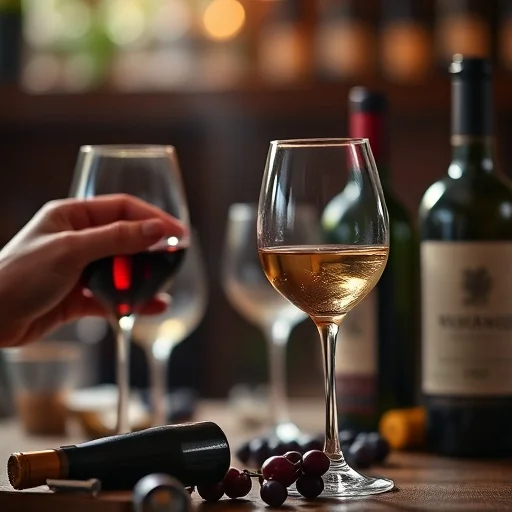
Generation Z drinks alcohol almost as much as the rest of the adult population; how much of that is wine, the data do not say yet. Wine Meridian reported it on October 23, 2026, citing two studies. One is the IWSR study conducted across 15 key markets. The other is the Ipsos Generations 2026 report, commented on by Cristina Liverani and Chiara Ferrari. For anyone who imports, distributes or serves wine, the point is no longer how much young people drink, but what they drink. Gen Z wine consumption is the real variable at play. Meanwhile, spirits and cocktails remain among young people’s favorite choices.
Wine consumption and Gen Z: the moderation that isn’t there
According to IWSR, 74% of legal-drinking-age Gen Z consumers say they consume alcohol. The share is almost identical to the 76% recorded for the adult population as a whole. Three years earlier, the same figure stood at 66%. Marten Lodewijks, president and managing director of IWSR, considers the narrative of young people as a “generation of moderation” now “conclusively debunked”.
It is not the young who drink less but the Baby Boomers. Their participation rate stands at 71%, down two points in three years. It is the lowest among all generations. They are also the group with the fewest drinking occasions and the lowest average number of drinks per occasion, at 2.6. Millennials remain on top at 81%, followed by Gen X at 77%.
“If the trend continues, it could be the Boomers, not Gen Z, who deserve the title of ‘generation of moderation’”, said Marten Lodewijks, president and managing director of IWSR.
Fewer categories per occasion: the selectivity of young drinkers
Gen Z drinks a lot, but differently. The IWSR Bevtrac data refers to September 2025 across 15 markets. It shows participation stable compared to the previous year and higher than in September 2023, but a shrinking repertoire: the average number of drink categories consumed per occasion fell from 2.8 to 1.8 in two years. Less mixing, less experimentation within the same evening, more selectivity.
The front of temporary abstinence, the ground on which young people were crowned pioneers of the “sober curious” movement, is also cooling. 53% of Gen Z say they have abstained for a period. The share is higher than the all-ages average (39%) but down on the year before. The pauses are getting shorter: 28% report abstinence of a month or more, versus 30% twelve months earlier.
The overall picture remains one of consumers more attentive to guidelines. According to Bevtrac, 49% of Gen Z follow government guidance on drinking. It is the highest share among the generations. 18% spent their last drinking occasion in the company of five or more people.
Wine as a rite of passage: what the Ipsos Generations 2026 report says
The Ipsos Generations 2026 report describes wine as a rite of passage postponed to a later age. According to Cristina Liverani and Chiara Ferrari of Ipsos, there is a cyclical component in the stigmatization of new generations. But the interesting figure is another one: in neighboring categories such as spirits, young people’s consumption remains higher than that of Millennials at the same age. For the two experts, it is not alcohol in general that is suffering, it is wine specifically.
The context has changed compared to twenty years ago, the experts explain. Today there are more alternatives, craft beers, zero-alcohol options and a focus on physical well-being that was previously absent. Some products have an increasingly premium positioning, which excludes those with less spending power. Wine “inhabits” specific occasions, the meal, the shared dinner, while in out-of-home social settings young people prefer something else.
Brand loyalty is another chapter: for Gen Z, unconditional loyalty no longer exists, and it must be earned through authenticity, transparency and trust. For wine, Ipsos notes, loyalty is by nature “multiple”. Those who love reds can appreciate very different grape varieties together. The proliferation of products does not compromise individual relationships.
Over-60s and thirty-five-year-olds: the targets wine risks ignoring
While the industry concentrates its efforts on the young, Ipsos points to a neglected mature target. The over-60s are described in the “Consumer Extinction” analysis as a dormant economy. They have financial resources and a propensity to consume. They are close to wine, open to experiences and in search of quality. Care must be taken, however, not to treat them all as retirees: many people over 55-60 are not retirees at all.
The 36-45 age group is the so-called “Squeezed Middle”, squeezed between children and elderly parents. For them, wine becomes domestic decompression. It is a personal moment or a dinner with a small group of friends, more than a night out on the town. Out-of-home consumption overall is not in crisis, Ipsos points out: the experience theme remains the real engine of consumption.
The most sensible strategy, according to the two experts, is twofold. On one side, targeted offers for the most populous age group, already educated in consumption. On the other, educational work with the youngest, at risk of exiting the basket for good. Natural wine, the analysis suggests, could be one of these hooks: a proposition that distinguishes young people from previous generations, even if only as a curiosity to explore.
The open question: how much of that 74% still belongs to wine
The IWSR numbers dismantle the “young people don’t drink” narrative, but leave the central question for the industry unresolved. The same Bevtrac study certifies Gen Z’s resilience and shows their greater inclination toward cocktails. 84% have had at least one in the last six months. It is the highest share of any generation. No equivalent figure emerges for wine.
It remains to be seen how much of that 74% still chooses wine and how much has moved to something else. The right question, the Wine Meridian analysis concludes, is no longer how much Generation Z drinks, because the data has already answered that, but how much of that consumption still belongs to wine.
Sources: