Regions and grapes
South African Wine Quality: Terroir, Old Vines and Cellar Practices
The wine quality of South Africa stems primarily from three concrete elements: a geologically ancient terroir, historic vineyards and precise cellar practices.
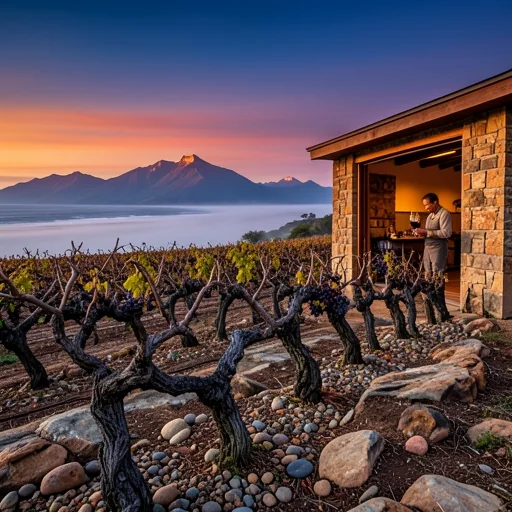
The wine quality of South Africa stems primarily from three concrete elements: a geologically ancient terroir that shapes acidity and minerality, historic vineyards that provide distinctive raw material, and cellar practices capable of turning that raw material into sensory precision. How those factors combine tells importers, restaurateurs and sommeliers what to check before putting a bottle on the list, from geology and biodiversity to old vines, certifications, the traditional method and cellar choices. Quality depends on terroir, vines and cellar practices.
Territory and biodiversity explain acidity, minerality and wine quality
The Cape landscape is among the geologically oldest. Some rock formations date back 3.22 billion years and are exposed materials. These rocks have endured billions of years of erosion. The stratification creates a mosaic of soils. This mosaic supports very different grape varieties within short distances. The practical result for buyers is simple. Nearby parcels can offer very different profiles of acidity and tension. This is useful for composing a list with crisp whites and more compact reds. Soil variability allows wines with distinctive character.
The climatic region is broadly Mediterranean. The cold Atlantic and the mountains create variable mesoclimates. Proximity to the sea and the cold Benguela current bring fog and cooling. This favours acidity in the grapes. For those assessing wine quality it means being able to request fresher wines with good gastronomic potential simply by choosing crus with marine influence. Choosing crus with marine influence increases freshness and food-pairing potential.
Fynbos, endemics and how the local flora speaks in the wines
The Cape hosts the Cape Floral Kingdom, the smallest but most varied of the six global botanical regions. Around 9,000 plant species grow there, of which over 6,200 are unique to the territory. The typical vegetation cover, called fynbos, emits oils and resinous aromas. These oils and aromas are often reflected in the aromatic profiles of the wines. The presence of rooibos notes, resinous herbs and garrigue is therefore a territorial element even in whites. Territorial biodiversity translates into recognizable aromatic signals.
For the buyer this translates into two operative choices. One can favour labels that declare the cru and the microclimate. One can also request technical tasting notes that specify the territorial aromatic profiles. In practice, biodiversity is not folklore. Biodiversity is an indicator of sensory and territorial coherence. It supports wine quality when vinification sides with the site instead of overwriting it with oak or invasive techniques. Asking for information on the cru and microclimate improves commercial selection.
Old vines, KWV and certification: what they really guarantee
The presence of very old vineyards in South Africa has a verifiable historical explanation. After 1918 KWV offered stable markets. This discouraged replanting and allowed the survival of centennial parcels. The commercial consequence is that today many mature vineyards exist. These vines show interesting concentration and complexity. Historic vineyards produce raw material with superior concentration.
In 2016 the Old Vine Project was born thanks to the work of Rosa Kruger. In 2018 the project introduced the Certified Heritage Vineyard seal, applicable to vineyards at least 35 years old. Buyers must understand what the seal certifies. The seal certifies age and documentation, it does not guarantee a specific style. However it provides a commercial lever and a verifiable story. The Certified Heritage Vineyard seal documents age and provenance. This can translate into a price premium on the South African domestic market.
What genetic conservation and the past say about the varietal profile
Chenin Blanc has a very long local history. It was introduced in 1655 by Jan van Riebeeck. Over the centuries the planted material underwent selections and variations. Some plant lines cultivated in South Africa no longer exist in the Loire. Local adaptations produced measurable differences in aromatic and acid profiles. For those selecting wine quality it is important to ask about the origin of the planting material. When possible, it is useful to obtain information on clones and agronomic practices. Verifying origin and clones is fundamental for due diligence in selections.
Local varieties such as Pinotage, born as a cross in 1925 in Stellenbosch, must also be read carefully. The name itself does not guarantee a recognisable style. Today many producers seek suitable sites. Many adopt more measured techniques to reduce historical faults. Evaluate varietal style by site and technique, not by name. This is an operative element in the buyer’s due diligence.
Cellar method: what Cap Classique guarantees and what it does not
The term Cap Classique identifies bottle refermentation practised in South Africa according to the traditional method. The method provides structure and the possibility of ageing on lees. However the method does not ensure finesse by itself. Finesse arises from vineyard choices and decisions on pressing, fermentation and time on lees. The process is a potential that must be realised with known parameters. The traditional method is a potential, not an automatic guarantee.
A useful operational example is the Graham Beck Blanc de Blancs 2020. This wine is 100% Chardonnay, i.e. a single variety. Only the press fraction was used. 46% of the wine fermented in neutral barrels, the remainder in stainless steel. It spent 60 months on the lees. At the time of bottling it showed 5 g/l of residual sugar. These data explain the linearity, the bakery notes and the citric tension. Requesting technical vinification data improves organoleptic forecasting.
Transparency about vineyard, vine age and cellar practices is essential to evaluate wine quality.
What to ask suppliers and what remains open for the European market
In commercial practice asking three fundamental pieces of information pays off. Asking the precise origin of the vineyard, its average age and the type of cellar operations is useful. Specifying press fraction, percentage fermented in wood and months on the lees helps a lot. These three items allow importers and sommeliers to predict acidity, body and style. Requesting the Certified Heritage Vineyard seal helps verify age when relevant. Requesting these three pieces of information is a fundamental commercial practice.
What remains open is the question of international visibility and supply continuity. Turning natural and historical advantages into stable commercial relationships requires consistent documentation of wine quality. It also requires willingness to discuss agronomic and technical practices. The next step for the European market is to prefer suppliers who provide these data. Preferring those who accept visits and technical checks is strategic. There the territorial promise becomes consistency in the glass.
Prefer suppliers who are transparent and open to technical verifications to ensure consistency in the glass.
Sources: