
Market and export
Public accountability in wine: tools for importers and producers
La public accountability is the thread that links production choices and cultural choices when we talk about wine.
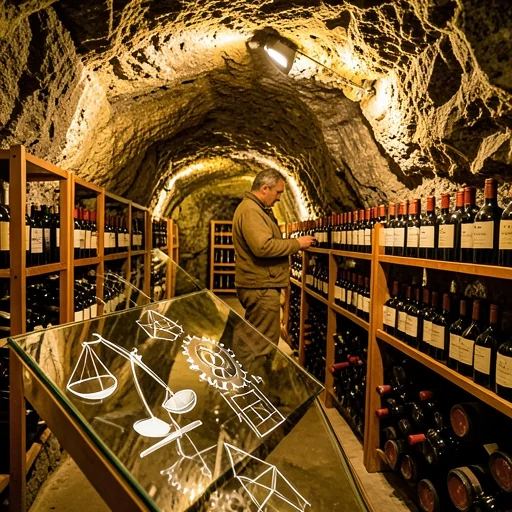
La public accountability is the thread that links production choices and cultural choices when we talk about wine. This article brings into dialogue the personal and technical story of Slovenian winemaker Branko Čotar and the institutional choices of the Fondazione Masi. The intent is to offer importers, distributors, restaurateurs and sommeliers concrete tools to assess reliability and transparency. Turning symbols and practices into verifiable criteria is possible.
From the vineyard carved into rock to a meaningful production scale
Branko Čotar began in Komen, in the Slovene Karst, planting 500 vines in 1974 to supply his restaurant. That domestic practice became a winery that bottled for the first time in 1990, and the winery has tunnels carved into the rock completed in 2002. Today the family produces about 30,000 bottles a year, an artisanal reality with repeatable capacity and continuity. Date of first bottling indicates producer experience.
For an importer, the date of first bottling and the annual production are concrete data that indicate experience, not narrative. Čotar has remained faithful to Karst practices and applies skin maceration for the whites for about a week. He cultivates by organic methods and ferments without added sulfites or corrections, and the technical records back those choices. The technical documentation confirms the practices declared by the producer.
This method expresses the territory but does not eliminate vintage variability. Consistency of style is instead demonstrated by aged vintages that evolve over time. Rational purchasing requires historical evidence, import references and visits to the estate. These tools serve to verify the producer’s claims.
When a cultural award imposes criteria of transparency and public accountability
The Fondazione Masi organizes the Premio Masi, now in its 45th edition and dedicated to the theme “the courage of responsibility”. The award evaluates personalities and organizations that practice heritage care, cultural innovation and civic engagement. Among the awardees are Luigi Carlon, Nello Cristianini, the Venice Gardens Foundation, oncologist David Khayat and Reporters Sans Frontières. The award combines cultural recognition and concrete public accountability.
The public ceremony will take place on October 16 in Gargagnago di Valpolicella, in the Monteleone21 complex. Before the ceremony the traditional signing on the Amarone Cask will take place at the Masi cellars. Isabella Bossi Fedrigotti is the president of the Fondazione Masi, and Sandro Boscaini is the vice president who linked the recognition to wine, science and society. Marco Vigevani is the secretary general who highlighted the role of freedom of the press as public oversight.
These details show that the award is not merely symbolic. The event also offers a framework to demand transparency. That framework can be translated into enforceable obligations and verifiable practices.
The award can become a tool to demand transparency in commercial relationships.
Putting accountability into practice: audits, clauses and verifications in contracts
To turn cultural recognitions into commercial practice requires simple and verifiable clauses in contracts. One proposed clause is the obligation of transparency on vinification practices, and the documentation must include bottling dates and annual production capacity. Documenting dates and production capacity is fundamental. Another important clause is the right to audit on the premises with limited notice.
The supplier must commit to retain production records for at least five years, so it is possible to trace back to real practices and not to declarations. Verifications make the producer’s claims credible and reduce disputes. The informational due diligence includes requesting references from long-standing importers and checking documented presence in known portfolios.
In Čotar’s case, the agreement with the United States importer Louis Dressner in 2003 is a verifiable element, and entry into the Triple A collection in 2003 is another element an importer can confirm. For those using digital tools for traceability, the contribution of academic experts in artificial intelligence is useful. Integrating technical expertise strengthens the evaluation of digital platforms.
Experts help evaluate tools without delegating critical decisions to closed platforms. These measures make public accountability practicable in commercial relationships. Verifiable contract clauses and external expertise together improve reliability.
Debunking a simplification: what the natural method guarantees and what it does not
Many believe that “natural” winemaking guarantees sensory uniformity or commercial stability, but it does not. No-added-sulfites practices and spontaneous fermentations emphasize variability and territorial authenticity. However, such practices do not ensure the same organoleptic repeatability year after year. Natural winemaking does not guarantee sensory uniformity.
Čotar demonstrates that consistency of style is possible with discipline and production continuity. His production has been steady and internationally recognized, but his bottles evolve over time rather than remain unchanged. The importer must separate two questions when evaluating a producer, the first about territorial expression and aging potential, the second about short-term commercial uniformity.
The practical procedures proposed help manage both dimensions, providing contractual tools and verifications to reduce risks. The harvest that begins in the Karst and the Monteleone21 ceremony of October 16 mark a time of choice.
The final decision rests with importers, distributors and those who serve wine.
Sources: