Wineries
Château de Pizay Vertical Integration and Transparency in Winemaking
Pizay vertical: Today transparency and authenticity are highly sought after. This applies both to the product and to communication.
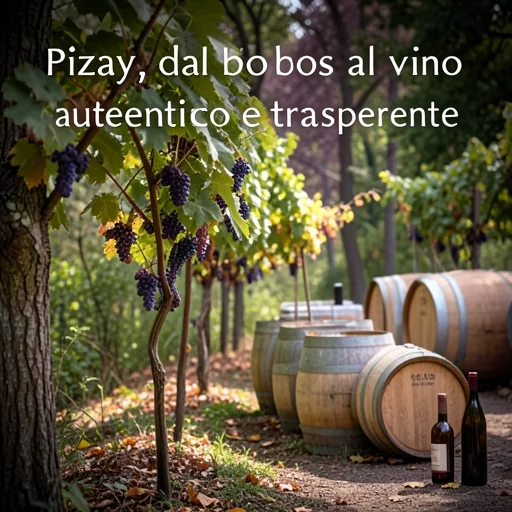
Today transparency and authenticity are highly sought after. This applies both to the product and to communication. Upstream decisions in the production process take on crucial importance. This is reflected in the making of an excellent wine. It is also reflected in building a clear and truthful message for the public. This process requires a careful narrative style. It is useful to explore the fundamental choices in creating a product. These choices align with the communication strategy. That reveals much about intrinsic value and external perception.
The authenticity of the production process
Château de Pizay, in preparation for its celebratory millennial cuvée in 2030, has undertaken a deeply vertically integrated initiative. Romain Schneider, director of the viticultural activity since 2021, began harvesting oaks directly from the estate’s 29 hectares of forest in Belleville-en-Beaujolais. Twenty trees were felled in January, and another five will be cut at the end of September.
These trees, many of them centuries old, were selected for their superior qualities, with long trunks and fine grain, ideal for coopering. After felling, fifteen oaks were chosen. They were free of defects such as frost cracks or water ingress. They were used for three 25-hectoliter foudres, ten 350-liter staves, and several 128-liter barriques. This integrated approach guarantees total control over the raw material.
Five oaks were discarded for container production. They were turned into supports for the large vats. Others became decorative elements for the estate, optimizing the material. There are additional harvesting and sawmilling stages. Nevertheless, the overall cost of the operation should remain comparable to purchasing containers on the market. This is the estimate given by Romain Schneider.
The value of transparency and narrative style
The production process at Château de Pizay is not only an internal matter but becomes an integral part of the experience offered to visitors. The woods were harvested in January. They were processed in sawmills such as Goursat in Lot and Rayon Bois in Corrèze. They return to Pizay in spring for a natural three-year drying. This phase takes place in the formal French garden of the castle, under the eyes of guests.
This public exposure of the process, with a log retained to show the wood’s structure, turns production into an explicit narrative. Similarly, in the world of writing, a nonfiction author consciously chooses their own narrative style to communicate the truth, whether journalism, criticism, or creative essays. The choice to make every step of production visible at Château de Pizay reflects the same intention of transparency.
The choice of narrative style directly influences the reader’s perception, who draws inferences based on stylistic decisions.
Likewise, castle visitors draw their own conclusions about the wine’s authenticity and quality by observing the care devoted to making the barrels. This “upstream selection” is a production method. It ensures traceability and the quality of the raw material. It is a powerful communication vehicle and a distinctive element.
From resource selection to the final message
The Château de Pizay project was made possible. This happened thanks to the renewal of the estate’s fifteen-year forest management plan. This allowed the valorization of the woods to be integrated. The forestry cooperative Coforet accompanied the director in marking the oaks, ensuring the presence of young plants for natural regeneration. This testifies to a long-term commitment and sustainable management.
The wood for the foudres will go to Foudrerie Joseph François. Shipment will take place in 2029. For the staves and barriques various cooperages will be used, including Cadus, François Frères and Dargaud & Jaeglé. This strategic partnership, combined with the care of its own forest, underscores the importance of deliberate choices that define the product’s identity.
These initial decisions guide subsequent ethical and structural procedures, defining the final character of the product or the message.
One can select centuries-old oaks for a celebratory wine. Or one chooses a narrative genre for a publication. The foundations laid at the start of the process determine the outcome. Care in selecting resources and the working method is important. This translates into a clear message of quality and authenticity. It is perceptible both in the glass and in the written word.
Sources: