Wine tourism
Natural wine: preserving workshop skills and converting tourists
Natural wine lives on concrete practices and a narrative that knows how to welcome non-experts.
Natural wine lives on concrete practices and a narrative that knows how to welcome non-experts. Two operational nodes show it: the choice of six vinegrowers who took over an agricultural mechanical workshop to maintain local skills and the practical levers to turn an ordinary tourist into a wine tourist who buys natural wine. Together they show what was saved, how commercial return is measured and which concrete steps are needed to make the supply chain reliable for importers and restaurateurs.
The goal is to maintain operational skills and build paths that convert visitors into customers.
Natural wine requires concrete practices and an accessible narrative. Maintaining local workshop capacity prevents knowledge loss.
Why a workshop saves natural wine
The Seda Delorier workshop, founded in 1982, was at risk of closing when the owner could not find a buyer after almost two years. Six local vinegrowers acquired it by investing €460,000, an amount that kept the site operational in the Charente. Continuity is essential because this is where machines fundamental for the harvest are repaired and modified: grape harvesters, harvesting machines, and windrowers, machines that align the shoots. Work is also done on weeding booms, that is, arms for targeted treatments.
Operational continuity is essential for the harvest.
The two workshop workers were involved and received the handover of procedures. They learned to manage estimates, parts orders and relationships with suppliers. If repairs had been moved more than 15 km away, operational knowledge would have been lost. Longer trips would have made it difficult to adapt historic tools to the specificity of the vineyard. Fewer machine downtimes means fewer logistical risks for the harvests. It also means more continuity in the supply of bottles to distributors. Fewer downtime events directly reduce supply chain risk.
Local maintenance preserves strategic skills.
Keeping the workshop also produces development. The partners plan to digitize management with planning and timesheets. They want to relaunch local productions, for example a sarment windrower interrupted for ten years. These actions improve traceability and production capacity. Traceability and production are elements that an importer must evaluate along with wine quality when choosing suppliers of natural wine.
Digitizing management improves traceability and production. Traceability improvements increase importer confidence measurably.
How to turn a tourist into a wine tourist
In a region that records 285 million overnight stays a year and with 28% of guests of international origin, a winery’s visibility is the first conversion filter. Online presence and local signage often decide whether a tourist notices a winery.
Online visibility is the first conversion filter.
Only 7% of tourists enter a cellar, that is seven visitors out of one hundred. To increase that number, elementary but concrete steps are needed. A Google page with updated hours is fundamental. A roadside sign is also needed to be seen by passersby. It is necessary to position oneself on the maps of wine tourism routes.
Simple measures increase tourists’ entry into the cellar. Updated online listings draw more cellar visitors.
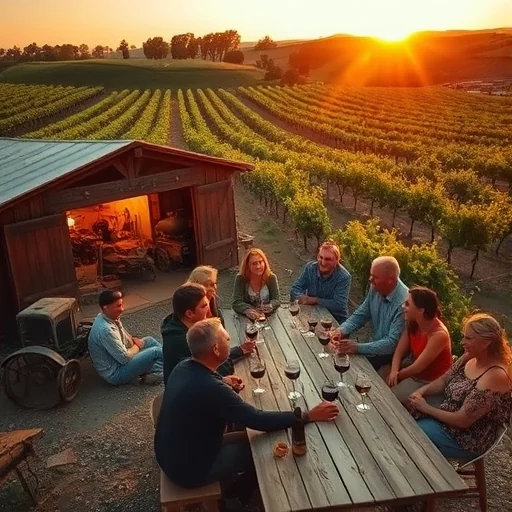
Activities designed for non-experts work better than a technical tasting. “Unusual apéritifs”, aperitifs in the vineyard with simple explanations, show a fill rate of 70%, that is seven seats out of ten occupied. These aperitifs generate purchases in 40% of participants, that is four customers out of ten who buy. “Meetings with a producer” sell 100% of seats. These meetings induce a repeat purchase in 28% of participants, that is almost three out of ten who return to buy.
Non-technical activities convert visitors better.
For a distributor or a restaurant evaluating producers of natural wine, the recommendation is operational. Investing in digital findability pays off. Offering a clean and unpretentious welcome is important. Care must be taken with the comfort of the place. It is useful to set up a follow-up procedure after the visit. These measures increase direct sales and build loyal customers. The effects are measurable and repeatable. A simple follow-up procedure increases customer retention.
Investing in digital findability benefits distributors.
Debunking simplifications: qvevri, technique and narrative
It is common to paint natural wine with simplifications that turn it into a magical label. Taking the Georgian practice of qvevri as a case, the distinction becomes clearer. Qvevri are large clay amphorae used to ferment grapes. This technique is distinctive. However, the practice does not eliminate the need for plant maintenance, supply chain control or commercial governance. Documenting how a qvevri is built and used is operational information for sommeliers and importers, not folklore.
Qvevri are a distinctive practice but not exclusive.
In the same way the workshop shows that “naturalness” does not replace technique. The design of a weeding boom affects daily work in the vineyard. Even the construction of a wire unroller, a machine that unrolls the wire for the posts, affects the quality of the final product. Without local mechanical skills, many agricultural practices with low chemical interaction risk translating into inefficiencies. Inefficiencies reduce commercial advantages. Technical competence determines operational and commercial outcomes.
Technique remains central even in natural wine.
A professional buyer must ask for proof. They must request transparency about processes. They must evaluate operational continuity. They must verify the ability to welcome and retain the non-expert customer. The presence of a local maintenance network and a public opening plan are concrete indicators of reliability for those who import and sell natural wine. Without these elements, the narrative remains communication, not guarantee.
A buyer must request concrete proof of reliability.
The next step is practical: replicate protocols that combine technical assistance, simple signage, an updated web page and offers suitable for non-experts. Only in this way will the bottles become sustainable commercial relationships and not sporadic events.
Only in this way will the bottles become sustainable commercial relationships and not sporadic events.
Sources: