Regions and grapes
Mosel Riesling: Read Vineyards, Scores and Service to Predict Quality
To select a reliable Mosel Riesling it is advisable to cross-check three sets of information.
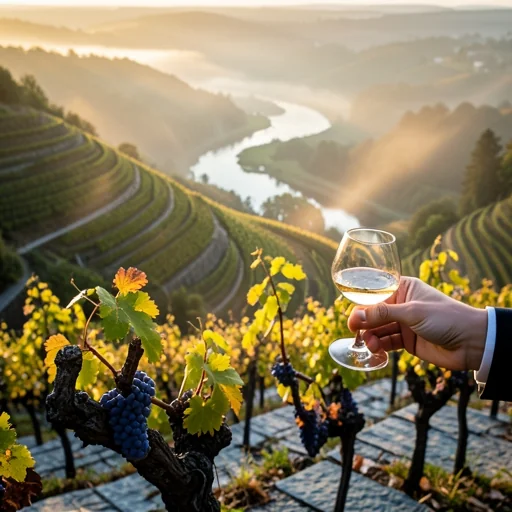
The vineyard tells what the bottle will show years from now. Photographs taken in the Mosel in September 2024 and the tasting notes of the Riesling presented at the VDP tastings help to observe terroir and gather practical information before choosing a Mosel Riesling: what to look for in the vineyard, how to read scores and descriptions and which service choices can soften or enhance the profiles that emerge from technical tastings.
The vineyard tells what the bottle will show years from now.
For clarity, Mosel and Mosella indicate the same German wine region; VDP is the association of classified producers that organizes technical tastings; cru indicates a vineyard recognized for its expression; rootstock is the material onto which the variety is grafted and influences vigor and adaptation.
What the photographs say: vineyard structure and field signals
The photographs taken in the Mosel in September 2024 show vineyards with varying vine ages and different genetic materials. These elements translate into different wines in the glass. Very old vines appear lower and more compact. That morphology tends to give more concentrated clusters and lower yields per vine. Young vines show more uniform clusters and direct aromas. This translates into greater production regularity but often less complexity in the long term.
Steep slopes increase acidity and mineral tension in finished wine. These conditions favor marked acidity and mineral tension in the finished wine. Steep exposures increase irradiation and create uneven ripening within the same cru. This requires more sorting work in the winery. Importers or servers must assess these variables. Collecting information on rootstocks and pruning management helps predict stability and the risk of variability between vintages.
The photos also reveal different training choices, from very low rows to high trellises, and practices that influence botrytis and grape health. This visual evidence is useful for planning sampling and requests for analytical data during commercial selection. Targeted vineyard checks are an investment that reduces uncertainty when dealing with wines with clear acidity and aging potential. The vineyard determines the character of the future wine.
Mosel Riesling in the glass: comparing notes and scores with what you see
The VDP tastings presented a sequence of Riesling 2025 and some 2024 with scores ranging from 85/100 to 96/100. These numbers signal organoleptic trends that can also be recognized in the vineyard. For example, a wine rated 96/100 indicates great concentration and detail. A 94/100 described as mineral confirms consistency with rocky soils seen in the photographs.
Other wines show different styles linked to harvest choices and yields. Maximin Grünhaus HERRENBERG 2025 is judged “backward” and with 93/100, so the wine needs time. Nik Weis LAYET 2024 is defined as “brisk and energetic” with 93/100. That description is typical of earlier harvests or higher yields that give more immediate wines. Relating these details to the signs seen in the field helps predict behavior in bottle and future cellar management.
The notes also reveal variations of reduction, spice and oxidative hints on some samples described as “eggy reduction” or “subtle oxidative hints.” Such signals can depend more on cellar choices than on terroir alone. For importers it is crucial to differentiate when an organoleptic trait is attributable to the soil or to winemaking. Using trial tastings helps verify consistency with the vineyard observations made in September 2024.
Observing the vineyard, reading notes and tasting samples allows safer commercial decisions.
Practical decisions for importers, sommeliers and restaurateurs
To select a reliable Mosel Riesling it is advisable to cross-check three sets of information: vineyard observation, scores and technical descriptions, and vintage data. When a cru mentioned in the notes gets 95/100 or 96/100, that is a very high score, it is reasonable to expect concentration and high acidity. However, one must verify the photographed years and training conditions to understand variability. Scheduling tastings on different lots requires the importer to request samples and information on rootstocks and yield per hectare.
In the dining room, the sommelier must prepare service according to the acidity and structure indicated. Wines described as “compact” and scored 94/100 tend to require lower temperatures and more attention to glassware. Plump wines and 95/100 can stand up to richer pairings. Planning decanting and cellar time depends on how vineyard observations indicate ripeness. It also depends on the time declared by the producers for opening the bottles.
It is important to dismantle a common simplification: observing calcareous slopes or old vines does not automatically guarantee a natural style or specific cellar practices. The VDP notes show that variability between drier and richer styles depends as much on enological choices as on terroir. Therefore a photograph alone is not enough to decide. Integrate image, notes and tastings before buying.
Sources: