Wine tourism
Measuring Wine Tourism: Family Wineries' Visits, Conversions, Orders
Measuring wine tourism means recording annual visits, conversions and B2B orders.
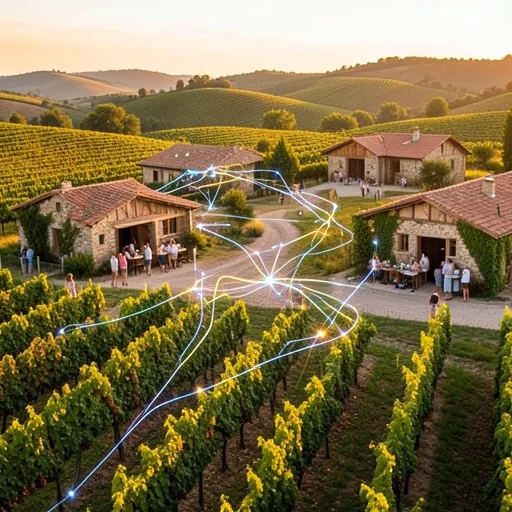
Measuring wine tourism means recording annual visits, conversions and B2B orders. Four family wineries have put numbers and practices at the service of hospitality: Il Pignetto (Lake Garda, family winery), Çobo Wine (Berat, Albania, pioneering reality), Ferghettina (Franciacorta) and Gorghi Tondi (Sicily). Territorial indicators from the Hunter Valley, in Australia, complete an operational picture for importers, distributors, restaurant owners and sommeliers who are looking for reliable partners.
Family wineries: why count visits and conversions
Il Pignetto considers wine tourism “more a profit center”; Ferghettina defines it “an investment in direct marketing”. Çobo Wine, in Berat, welcomed about 20,000 visitors in the last year, an evident source of commercial contacts. Measuring means recording bottles sold after a visit, noting orders born from tastings and segmenting B2B requests. A simple CRM turns relationships into data. A simple worksheet or a basic CRM can transform the direct relationship into data usable for market decisions.
For importers and distributors the minimum field of collection is clear: annual visits, visit→sale conversion rate and professional orders generated in 12 months. The conversion rate is calculated as visits that result in a sale divided by total visits. The rate is a KPI that provides immediate benchmarks without technological complexity. In the realities we observed, retention is still more relational than digital. None of the family wineries uses a fully operational wine club today. Ferghettina announced that a wine club will start and a newsletter will begin at the end of August.
Measuring does not mean depersonalizing hospitality, but using numbers to decide.
Training and hospitality: family, ONAV and new roles in family wineries
Hospitality training in family wineries often happens through shadowing and daily practice. At Il Pignetto family members run the tastings. Ilaria trained by attending ONAV taster courses of first and second level. Ilaria’s sister has a degree in oenology. Çobo Wine emphasizes family continuity, now in the third generation, as a daily school for those who welcome guests.
Gorghi Tondi, in Sicily, chose a different path. Since 2017 wine tourism has been a structured project. In 2026 the winery added an under-30 Hospitality Manager, Beatrice Bonzano, to give systematization to the experiences. The presence of a dedicated figure indicates the capacity to program events all year and to speak to different targets. For those evaluating partnerships, knowing whether the winery has dedicated staff is as important as knowing the events calendar.
The role of the territory and what Hunter Valley teaches
The territory changes commercial dynamics and seasonality. The Hunter Valley has been a wine region since 1828, almost 200 years of history. It is located 160 km from Sydney, about a 2-hour drive. Today it counts 2,600 hectares of vineyards with 150 wineries. The Australian experience shows that proximity to a large city and a clear varietal identity favor visibility and sustainable tourism over time.
Hunter’s specialty, Semillon, occupies just over 30% of plantings. Pickers harvest it with potential alcohol around 11%. This ripening choice favors acidity and aging capacity. This technical element has practical consequences: product predictability facilitates regular professional orders. Ferghettina and Il Pignetto operate in Italian contexts such as Franciacorta or Garda. The maturity of the territory influences the tendency between collaboration and competition among wineries.
Product predictability facilitates regular professional orders.
Four operational practices for importers, distributors and restaurant owners
First: ask for the numbers of annual visits and a report of B2B orders generated in the last 12 months. A clear figure avoids surprises in commercial evaluation. Second, verify the form of hospitality. If the winery employs family members for welcome duties, document the level of training, such as ONAV courses or degrees in oenology. Check whether there is a dedicated person, like the Hospitality Manager hired by Gorghi Tondi in 2026.
Third, adopt a mini-operational CRM template, even as a Google Sheet. The template should include minimal fields: guest name, visit date, follow-up and commercial result. This allows the conversion rate to be calculated in a repeatable way. Fourth, check the events calendar and seasonality. Çobo Wine shows that the consolidated presence of visitors year-round expands opportunities. Il Pignetto reports marked flows from March to October. This information helps schedule order collections and professional visits.
The balance remains open: family wineries demonstrate that measuring does not mean depersonalizing. It remains to be seen how many realities will digitize retention while keeping the style that makes them recognizable. It remains to be seen how much the professionalization of hospitality will integrate with tradition without flattening it. The operational decisions that importers and restaurant owners make in the coming months will say whether measurement will be a tool for growth or for standardization.
Sources: