
Market and export
Market dynamics in the wine sector: tradition and digital adaptation
The ability to adapt quickly to new technologies and consumer behaviors is crucial for growth in the wine sector. The world of wine is in constant evolution.
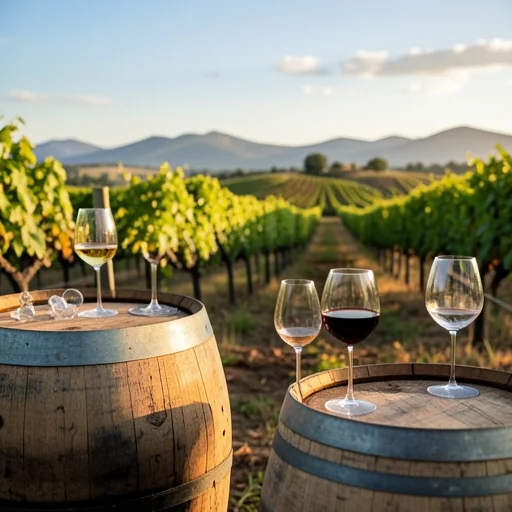
The world of wine is in constant evolution. Long history and deep roots clash and merge. This happens with the demands of a dynamic and competitive market. Some regions struggle to preserve their identity. Others seek new ways to reach consumers. They face various challenges. The challenges include the modernization of distribution. Drinkers’ preferences also change. This complex scenario, involving both historical producers and new entrepreneurs, defines the current market dynamics in the wine sector.
Fragility of Traditions and New Challenges for the Wine Sector
Many wine traditions, though rich in history and cultural value, are today fighting for survival. A striking example is the case of Carcavelos, a Portuguese fortified wine that in the 19th century enjoyed fame equal to that of Port. Its production region is east of Lisbon. Its vineyards have been almost wiped out. This has happened over the last 150 years. The causes are urban expansion and coastal tourism. Today, only 22 hectares of viticulture remain, from which Villa Oeiras produces a sweet fortified wine that testifies to a glorious past. This decline vividly illustrates how external factors can threaten centuries-old productions.
Similarly, general interest in fortified wines has declined in recent years. Moscatel de Setúbal must face this trend. Its position is less precarious. This is thanks to José Maria da Fonseca. He has helped maintain robust production. He has done so since the late 1700s. The Península de Setúbal boasts approximately 330 hectares. These are dedicated to Moscatel production. In 1907, it was Portugal’s second demarcated wine region. It came after Dão. These examples underscore an important lesson: no tradition is immune to market changes, and the perception of being “irreplaceable” can prove dangerous.
Eric Carrière is a former professional footballer. Today he heads Gruppo Carrière. His Caves Carrière have a turnover of 11 million euros. He has observed the wine industry. It is similar to football. It must never take its position for granted. He compares some wine regions to a team. There is the danger of feeling irreplaceable. This is a warning. It suggests the need for constant vigilance. This vision applies not only to fortified wines seeing declining interest, but also to established regions like Bordeaux, which Carrière notes is losing momentum, and to Burgundy, where prices have doubled, alienating new consumers.
Adaptation Strategies and New Business Models
To counter market challenges and ensure sustainability, many wineries and distributors are adopting innovative strategies. Digital transformation is a fundamental pillar. Gruppo Carrière developed its e-commerce platform. It did so before the Covid emergency. It anticipated the importance of reaching customers online. This move allowed it to broaden its reach and offer a catalog that today boasts over 6,000 references from a thousand partner domains. The ability to adapt quickly to new technologies and consumer behaviors is crucial for growth in the wine sector.
In addition to digitalization, diversification and geographical expansion are key tactics. Carrière consolidated his wine merchant business near Dijon. He expanded operations, opening new 600 sqm premises. This happened between 2014 and 2016. In 2016, he diversified into other regions. That year was characterized by frost in Burgundy. The company extended trade to Bordeaux. It created a structure for purchase and resale. It is for Horeca professionals and for export. It distributes more than 60,000 bottles. This happens via e-commerce and physical channels. This multi-channel and multi-regional approach reduces dependence on single areas or wine styles.
Customer focus and relationship care are distinctive elements for a business that wants to prosper. Carrière has always operated “as if he were a customer,” testing solutions he himself would appreciate. Every online order is followed by a confirmation call, a simple gesture that maintains human contact and strengthens the bond with customers and suppliers. This approach is reflected in the wine selection. Nickel and Nickel’s Cabernet Sauvignons in Napa offer impressive quality and reliable taste. COS’s Rosé Rosa di Lupo in Sicily is appreciated for its freshness and savoriness. Consistent quality is a pillar of customer trust.
The maintenance of direct ties with producers remains the guiding principle for the development of his activities.
The Value of Direct Connection and Experience
The direct relationship with producers is a distinctive and strategic factor. Carrière emphasizes that maintaining this bond is his main guideline for business development. This not only guarantees access to quality labels and exclusive allocations but also allows for a deeper understanding of the product and its context. This connection is fundamental. It offers consumers wines that reflect the territory and the passion of the producers. Whitehall Lane’s Sauvignon Blanc in Napa has bright tropical flavors. Wines from specific vintages have unique characteristics. Whitehall Lane’s 2022 Cabernet Sauvignon has ripe fruit but is less long-lived.
Gruppo Carrière’s expansion does not stop at distribution but aims to enhance the overall wine-related experience. The company opened a new logistics site in 2025. It is 3,000 square meters large. It is located in Nuits-Saint-Georges, Burgundy. It has a storage capacity of one million bottles. This infrastructural investment not only optimizes the supply chain, but is also part of a broader project to realize a high-end hospitality offering in the heart of Burgundy, developing the “experiential dimension of wine.”
The ability to adapt quickly to new technologies and consumer behaviors is crucial for growth.
This holistic approach, which combines efficient logistics, careful selection, and a focus on consumer experience, is essential for navigating the future of the wine sector. Regions like Carcavelos remind us of the fragility of traditions. Modernization threatens them. Carrière’s initiatives and the resilience of Moscatel de Setúbal demonstrate otherwise. Innovation, diversification, and connection to the territory are crucial. This makes it possible not only to survive, but also to prosper and redefine the value of wine in the contemporary world.
Sources: