
Regions and grapes
Biodiversity in Margaux: +36% bats and +15% wild bees
In the Margaux vineyard, biodiversity is growing in measurable ways. The same measures have led to a 15% increase in wild bees.
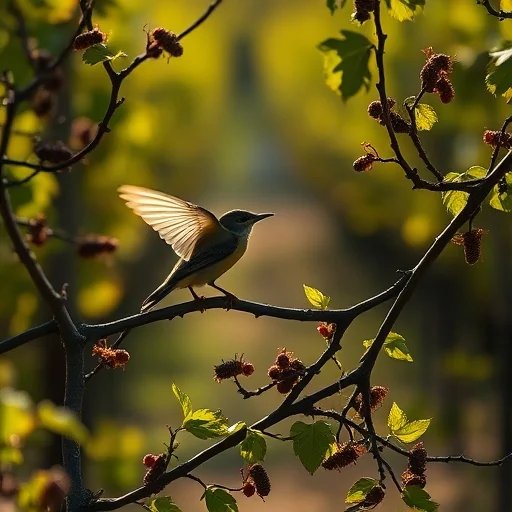
In the Margaux vineyard, biodiversity is growing in measurable ways. As Vitisphere revealed on 2 November 2026, ten years of interventions have produced a 36% increase in bat contacts across the Bordeaux appellation. The same measures have led to a 15% increase in wild bees.
Ten years of Margaux initiatives for biodiversity in the appellation
Since 2015, the growers of Margaux have multiplied measures to support fauna and flora across the 1,550 hectares of the appellation. The numbers tell the scale of the work. Some 19.5 kilometers of hedgerows have been planted. And 189 hectares of plots, their edges and the ditches alongside have been converted to late mowing.
The structural result is just as significant. As Emilie Fabre, head of the Margaux wine syndicate, points out, 96.4% of the appellation’s area is committed to an environmental approach. These are not isolated projects, but near-complete coverage of the entire production area.
Monitoring results: more bats and wild bees
To verify the effects, in 2025 the wine syndicate turned once again to the Ligue pour la protection des oiseaux (LPO) and David Genoud, an independent entomologist and naturalist who had already carried out the first measurement in 2015. The two experts recounted bats, diurnal butterflies, birds and wild bees at 14 sampling points laid out in a grid across the vineyard.
The comparison with 2015 yields clear outcomes: +36% in bat contacts and +15% in the number of bees. And at some sites the situation went beyond the average. “At certain sites, bee populations have more than doubled in both abundance and diversity; it is a success,” declared Emilie Fabre.
Birds on the rise, butterflies harder to assess
The evolution of the bird population is also positive. The sectors that benefited from biodiversity-focused measures count on average 2.7 more bird species than in 2015, with differences ranging from clear-cut to spectacular at certain sites, according to the syndicate’s head.
The mechanism can be traced to the concrete installations. The development of a hedgerow at the edge of a plot has created habitats favorable to nesting passerines. The presence of unmowed spontaneous vegetation in the ditch has also helped these birds.
For diurnal butterflies, the picture is more complicated. The sampling protocols changed between 2015 and 2025, making the comparison less direct. Their richness and abundance, however, appear tied to the level of ground cover in the row and inter-row of the plots studied.
Sources: