
Wineries
Louis Roederer's quality strategy from Cristal 2018 to Collection
The choices on Cristal 2018, the transition from Brut Premier to Collection, and the contribution of the Sagna family show how wine evolves.
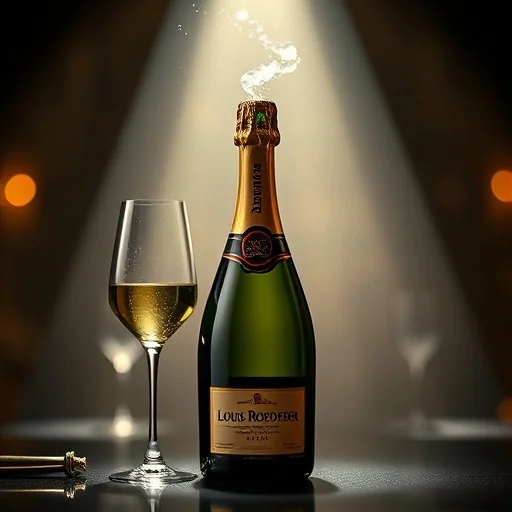
The strategy of Louis Roederer returned to the center of the debate on October 19, 2026, when Wine Meridian published its report on the evening dedicated to the Maison’s 250th anniversary and Cristal’s 150th, hosted at Da Vittorio. Frédéric Rouzaud, seventh generation of the family at the helm of the champagne house, linked the pursuit of quality to independence and long-term investment. The choices on Cristal 2018, the transition from Brut Premier to Collection, and the contribution of the Sagna family show how wine evolves. This evolution also involves distribution. The issue concerns anyone working between production and the market.
”Becoming better, not bigger”: Rouzaud’s vision for Louis Roederer
“Our ambition is not to become bigger, but to become better.” Rouzaud spoke these words during the celebration evening. He explained what he means by “better”: working better in the vineyard, understanding the soils more deeply, refining the ability to create. It also means passing knowledge on to the next generations.
The ability to make these choices depends, according to Rouzaud, on independence. “Independence is not simply a matter of ownership, but a state of mind.” For the Maison, it means being able to invest in the vineyards and the wines with the necessary patience, even when the value of a decision only emerges many years later.
For those working in wine, Rouzaud’s position raises a question. It concerns the investments one manages to carry forward long enough to assess their results. Quality requires work in the vineyard and the cellar, but also the continuity needed to understand whether a choice works and, when necessary, to correct it.
Cristal 2018: revisiting established choices
Continuity does not mean standing still. Jean-Baptiste Lécaillon, chef de caves of the Maison, described the choices behind Cristal 2018. The vintage was particularly hot and dry. The assemblage involved 57 parcels instead of the 45 of the traditional perimeter. The search for greater freshness led to revisiting an established choice. This is the concrete mechanism behind the word “better”: not an abstract principle, but a recipe rewritten in response to a vintage.
The distributor’s point of view: the Sagna family
To the production vision, the Sagna family added a perspective closer to the daily work of the market. The company has imported and distributed Louis Roederer in Italy since 1988. “The success of a product is not only due to the producer,” Carlo Alberto Sagna recalled during his speech. The distributor, the agents, the retailers and, ultimately, the person who chooses the wine all matter too.
For Sagna, product quality and the continuity of commercial relationships must support each other. That, according to the importer, is how an identity built in the cellar finds a recognizable presence on the market.
From Brut Premier to Collection: changing a historic reference
The transition from Brut Premier to Collection sums up the point. According to the Sagna family, Brut Premier made the Maison’s fortune. Roederer nevertheless chose to rethink that wine. This case raises a concrete question for other companies as well: when an important reference changes, can those who distribute it explain what is improving, and why?
The tasting as concrete proof
The evening concluded with a tasting. It spanned Collection 246, Cristal 2018, Cristal Rosé 2015, Cristal Late Release 2008 and Cristal Rosé Late Release 2008. It also included Cristal Rosé Vinothèque 2002 and Cristal Vinothèque 1995. Seven different bottles representing projects and release timelines. They gave concreteness to the choices described during the evening.
Sources: