
Regions and grapes
Kisi: the white wine that drinks like a red
Kisi, a white grape from Kakheti that almost disappeared by 2000, gives an amber, tannic wine when made in qvevri: origins, styles and Agrida's Kisi.
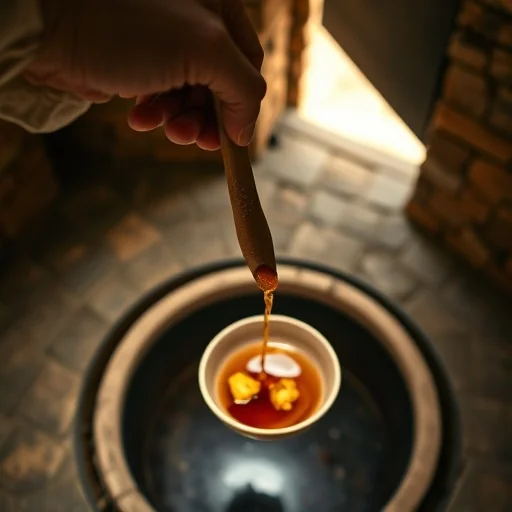
Poured into a glass, qvevri-made Kisi is amber in colour and leaves a sense of tannin in the mouth, the slight grip usually associated with red wines. Yet it comes from a white grape from Kakheti, the great wine region of eastern Georgia. The qvevri is the buried terracotta jar in which wine is made in Georgia, and it explains much of this character. For anyone who knows Italian skin-contact wines, Kisi is a good way to understand why a white can drink almost like a red.
A Kakheti grape that nearly disappeared
Kisi is a white grape native to Kakheti. According to the National Wine Agency, Georgia’s national wine authority, by 2000 Kisi had almost disappeared. The agency attributes this to the Soviet-era preference for Rkatsiteli and to the decline of Georgian vineyards after the collapse of the Soviet Union, and adds that Kisi is somewhat harder to grow. In 2004 there were 20 hectares, all on family farms, 18 of them in the Akhmeta district; in the Telavi district, 50- to 60-year-old vines survive and new ones are being planted.
Kisi is not an isolated case. According to a study by Chkhartishvili and colleagues published in the journal Economia agro-alimentare (2019), 525 Georgian grape varieties were known over the centuries, but most have been lost; today more than 437 rare varieties are preserved in the GEO 038 collection of the Agricultural Research Center, established in 2014. A scientific review by Sargolzaei and colleagues (Frontiers in Plant Science, 2021) counts more than 700 Georgian accessions, held in nine collections in Georgia and in collections abroad, 443 of them in Italy. The same review lists Kisi among the white varieties recommended for Kakheti, alongside Rkatsiteli, Mtsvane Kakhuri and Khikhvi.
Kisi in the vineyard and the cellar
According to the national agency, Kisi buds late and is fairly resistant to frost, drought and downy mildew, but susceptible to powdery mildew and black rot. It ripens before Rkatsiteli, usually in the last two weeks of September. The Sargolzaei review adds a less familiar detail: faced with bois noir, a grapevine disease caused by a phytoplasma, most native Georgian varieties show only mild symptoms, while in the study’s images Kisi, like Chardonnay, shows severe ones.
Kisi is made both in the European style and with the Georgian qvevri method, and is occasionally fortified. In the European style, the agency says, it gives a straw-coloured wine with a floral nose and flavours of pear, citrus and green tea; in amber qvevri wines apricot, mango, lime, orange and walnut come through. According to the agency, some producers believe Kisi can make finer, more expressive wines than Rkatsiteli.
Why a qvevri white has tannin
The difference lies in the method. According to a 2019 study by Bene and Kállay in Acta Alimentaria, skin-contact whites, known as orange wines or qvevri wines, are made from white grapes using ancient Georgian techniques: the essence of the method is a long fermentation on the skins in amphorae, without chemicals or selected yeasts. The authors measured total polyphenols, catechins and colour intensity in these wines.
For Rkatsiteli, another Kakheti white, the National Wine Agency describes the effect clearly: made in the European style it gives delicate floral aromas of citrus, quince and apple, while in qvevri the wine is typically more powerful, moderately tannic and with crisp acidity. The Sargolzaei review offers another element, which applies to Georgian grapes in general and was not measured on Kisi alone: compared with the species average they have more sugar, more acidity and thicker skins, which ensure adequate amounts of phenolic compounds.
What Agrida’s qvevri Kisi tastes like
These are notes on individual wines, not on the grape. Agrida, a winery founded in 2018 in Shilda, in Kakheti, describes its qvevri Kisi on its website without giving a vintage: grapes from villages in the Akhmeta municipality, an amber colour, a sweet scent of candied nuts and sweet spices, pleasant tannins and acidity on the finish, 12% abv. The producer recommends serving it at 14-16 degrees.
Etilika’s product sheet covers the Kisi Qvevri 2019: a single-variety Kisi from Kakheti, made and aged in qvevri, with notes of dried apricot, peach, ripe stone fruit and chamomile and a tannic presence that, according to the sheet, enriches its texture. The same sheet reports a bronze medal at IWSC Georgia 2024 with 87/100: the award applies to this wine, not to Kisi in general.
Where to find it in Italy
According to the Etilika sheet, the Kisi Qvevri Bianco 2019 from Agrida is a dry white from Kakheti made entirely from Kisi and aged in qvevri. To taste it next to another rare white from the same winery and the same vintage, the Georgia Segreta box pairs it with Agrida’s Khikhvi Qvevri 2019 and the 2025 Ojaleshi from Ninos Marani.
Sources:
- National Wine Agency of Georgia: scheda ufficiale del vitigno… | wine.gov.ge
- Sargolzaei et al. (2021), Georgian Grapevine Cultivars: Ancient… | pmc.ncbi.nlm.nih.gov
- Chkhartishvili, Mamasakhlisashvili, Tchanturia, Bakradze, The rare… | francoangeli.it
- Winery Agrida (sito ufficiale del produttore): vitigni lavorati e… | wineryagrida.ge
- Etilika: Kisi Qvevri Bianco Georgia 2019 - Agrida (scheda prodotto) | etilika.it
- Bene e Kállay (2019), Polyphenol Contents of Skin-Contact Fermented… | real.mtak.hu
- Etilika: Box Degustazione “Georgia Segreta” (3 bottiglie): Kisi… | etilika.it