
Regions and grapes
Khikhvi: Ripe Fruit and Qvevri from a Rare Kakheti Grape
Khikhvi, a rare white grape from Kakheti at risk of disappearing, from qvevri to glass: traits, numbers and Agrida's bottle now in Italy.
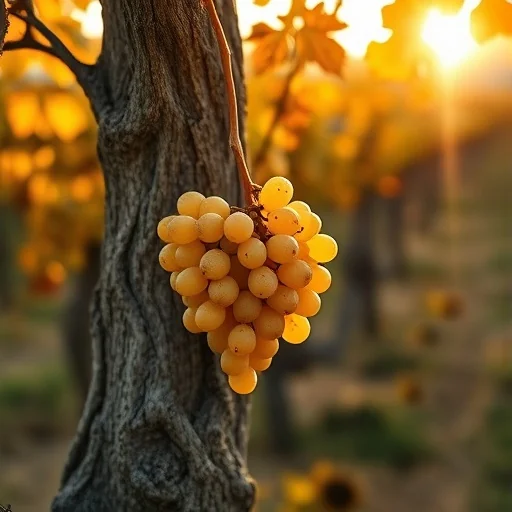
In a vineyard in Kakheti, the wine region of eastern Georgia, the rows of Khikhvi reach ripeness in mid-September. According to Georgian research in ampelography, numerous native grape varieties are threatened with extinction and today survive mainly in vine collections. Khikhvi, a white-berry native Georgian grape, lives in a similar condition: little known outside Georgia. Yet from its clusters come high-quality white wines, both dry and dessert styles. These wines are made either with the European method or with the traditional fermentation in qvevri, the large terracotta amphora buried in the ground.
Khikhvi, a Rare Grape Variety That Science Is Rediscovering
Khikhvi, also called Jananura, is described by the Georgian national grape database as a native variety of high quality grown across the districts of Kakheti. Its clusters reach full ripeness around mid-September in the main zones of the region. The must reaches a sugar content of 23-24%, with acidity of 6.5 grams per liter. These figures explain why the variety yields both dry wines and dessert wines of particularly high quality.
The rarity of many Georgian varieties has a documented explanation. A 2021 study analyzes the rare varieties of western Georgia preserved in the Jigaura collection. Climate change, pest invasions and pressure on yields have reduced many native varieties to survivals confined to collection plots. The same research notes that growing competition in the global wine market has sparked producers’ interest in rare varieties. The ampelographic and enological study serves to identify promising accessions for future selection programs.
Georgia’s Contribution to Grapevine Diversity
Khikhvi is not an isolated case. A scientific review of Georgian grape germplasm biodiversity places the country’s varieties in a genetic group distinct from the European one. The review records a rich diversity of traits: eno-carpological and phenological characteristics, resistance to pathogens such as oomycetes and phytoplasmas, and tolerance of abiotic stresses such as sunburn. Georgia counted 48,000 hectares of vineyard and in 2015 produced about 100 million liters of wine, 80% of it from white grapes.
For the grape variety, this diversity is a resource. The review points to Georgian varieties as a source of useful traits for genetic improvement programs, in the context of adapting viticulture to climate change. On the molecular front, the Institute of Molecular Genetics of the Agricultural University of Georgia has completed the genome sequencing of four Georgian varieties, Rkatsiteli, Saperavi, Meskhuri Mtsvane and Chkhaveri, a significant piece of work because, at the start of the project, the only complete genome of a cultivated grapevine ever decoded was that of French Pinot Noir.
From Cluster to Qvevri: How the White Wine Is Born
Khikhvi lends itself to several styles. According to the official description of the variety, the wine made with the European method is light straw-colored. It is full-bodied, harmonious and pleasant, with a delicate varietal aroma. The Kakhetian version, fermented according to local tradition, is a darker straw color, more structured, with notes of ripe fruit and yellow dried fruit. From Khikhvi, together with Rkatsiteli and Mtsvane Kakhuri, the fortified white with controlled designation of origin “Kardenakhi” is also produced.
The most characteristic route remains the qvevri. Agrida’s Khikhvi Qvevri Bianco 2019, according to the Etilika sheet, ferments and ages entirely in qvevri. This is the traditional Georgian terracotta amphora, which accompanies both phases in the cellar. The grapes are selected in the vineyard and harvested by hand. The wine is a dry white from the 2019 vintage, with 12% vol. in a 0.75-liter bottle, produced without added sulfites, though naturally occurring ones remain.
The vineyard is located in Kakheti, at an altitude between 450 and 550 meters. According to the sheet, the soils are sandy loam with yellow or brown alluvial clays, well drained.
Where to Find It in Italy
Agrida’s Khikhvi Qvevri Bianco 2019 is available in Italy through the listing on Etilika. The listing gives the essential details: 2019 vintage, dry white, manual harvest, fermentation and aging in qvevri. Compared with the story told above, the listing makes it possible to link the name of the variety to a concrete bottle and to taste how a Georgian white changes when fermented in terracotta. It is a direct way to get to know a grape variety that few people outside Georgia have ever seen in the glass.
Sources: