
Market and export
Global Wine Market Transformation: Exports, Climate, New Tastes
The global wine market is undergoing a period of profound changes, with trends reshaping the maps of production and consumption.
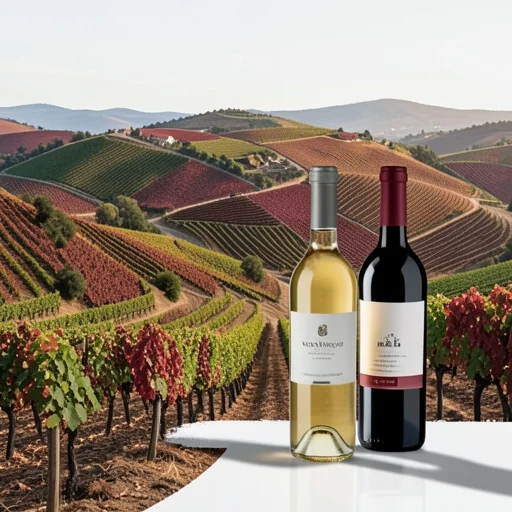
The global wine market is undergoing a period of profound changes, with trends reshaping the maps of production and consumption. Declines in historical markets and environmental pressures intertwine with the emergence of new geographies of taste and the search for distinctive wine expressions.
The global wine market is undergoing a period of profound changes, with trends reshaping the maps of production and consumption.
This complex scenario requires careful analysis. It must go beyond alarmism. The analysis focuses on the structural transformations underway. These include export difficulties and climate impacts on agriculture. Labels that define new standards of quality and regional identity are also emerging. The wine market is not just contracting, but undergoing a true redefinition.
The Transformation of the Global Wine Market
Australian wine exports have hit their lowest levels since 2004. This is a significant indicator of global dynamics. A 7% decline in value was recorded, to AUD 2.30 billion. Volume fell by 6%, amounting to 598 million liters. This occurred in the year ending June 2026. This is the first time in 22 years that volumes have dropped below 600 million liters. This is a sign of a decline. The decline is not isolated but reflects a broader trend. The previous calendar year, 2025, had already seen an identical drop, highlighting persistent difficulty in international positioning.
This contraction is part of a context of reduced global wine consumption. Consumption has fallen to its lowest level since 1961. This was highlighted by Peter Bailey, Manager Market Insights at Wine Australia. Factors such as moderation in alcohol consumption, cost of living pressures, and consumers shifting to alternative beverages are reshaping global demand. Simultaneously, production is under stress. The 2026 Australian vintage was the lowest in 26 years. This data compounds the difficulties in foreign markets.
The challenges are not limited to Australia. In France too, the agricultural sector is under severe strain due to summer heatwaves that have caused serious droughts. 65% of French territory was affected by a drought with an estimated frequency of once every 25 years, causing yield losses of 50% or more. Viticulture has been identified as one of the most affected productions. This occurred in as many as 57 departments. This highlights a crisis. The French government has not fully understood it, according to the “Jeunes Agriculteurs”. It is delaying the announcement of emergency aid.
From Traditions to New Regional Expressions
Despite global difficulties, some markets and wine styles show remarkable resilience and growth. While China, the United Kingdom, and the United States - traditional pillars of Australian exports - have slowed down, Canada and Southeast Asia have recorded double-digit growth. Canada, in particular, saw a 20% increase in value. It reached 188 million dollars, the highest level in seven years. There was also a 13% increase in volumes. This performance was partly favored by a trade dispute between Canada and the United States, which reduced the availability of US wine.
In this dynamic scenario, labels are emerging that capture attention for their quality and their ability to interpret the territory. The Rall Syrah 2024 comes from Swartland, South Africa. It is a wine with 13% alcohol. It is aged in concrete and stands out for its floral aromas. It has hints of black cherry and berries. Savory notes of olive tapenade and black pepper are perceptible. In parallel, the Mateus Nicolau de Almeida Trans-Douro-Express Cima Corgo 2022 comes from Douro, Portugal. It has 12.5% alcohol and offers a fresh and fruity profile. Red cherry, plum, and raspberry are perceptible. It also has a wet stone minerality.
Even in the United States, despite a general decline in imports, producers like Ponzi in Oregon continue to offer high-quality wines. The Ponzi Vineyards Laurelwood District Chardonnay 2021 has 13.1% alcohol. It is aged with 14% new wood. It presents notes of white pepper, pear, and peach. These are enriched by spicy and herbal hints. The Mateus Nicolau de Almeida Trans-Douro-Express Douro Superior 2022 has 12.5% alcohol. It stands out for its freshness and vitality. It has bright raspberry and cherry fruits. It also presents good acidity. These examples demonstrate how the pursuit of quality and regional identity remains a driver.
Resilience and Innovation in the Face of Challenges
The response to the current market and climate challenges lies in resilience and innovation. In the United Kingdom, Australian exports recorded a 3% decline in value. The value dropped to 340 million dollars. Volumes are at their lowest in 25 years. High-end Australian wines have shown greater resilience. This suggests that, in a market where less is consumed, consumers are often willing to invest in products of higher quality. This trend aligns with the focus on the distinctive characteristics of wines like Rall Syrah or Mateus Nicolau de Almeida’s Douro wines.
The climate crisis, with its direct impacts on production, requires concrete actions and structural support. French winegrowers are asking for a “true white year.” This year is banking, fiscal, and social. They are asking for the deferment of 2027 annuities. The State should cover the interest. This serves to prevent the collapse of the most fragile treasuries. Exceptional losses caused by drought have generated needs exceeding 10,000 euros per single farm in many regions. The Confédération Nationale des AOC (CNAOC) emphasizes a point. Anxiety is fought with action, not fatalism. It calls for massive investments in vineyard protection. It also requires regulatory simplification.
The search for sustainable solutions and adaptation to climate change are now unavoidable priorities. The wine industry, from vineyard to bottle, must face a profound transformation, investing in prevention and innovation to ensure a future for viticulture. The challenge is complex, but also rich in opportunities for those who can interpret and anticipate the new needs of consumers and the requirements of the territory.
Sources:
- Export Australia ai minimi dal 2004. Il baricentro si sposta tra… | winemeridian.com
- Highlights: Rall Syrah 2024 Swartland, South Africa | wineanorak.com
- Highlights: Mateus Nicolau de Almeida Trans-Douro-Express Cima… | wineanorak.com
- Highlights: Pinot Noir and Chardonnay from Oregon winery Ponzi | wineanorak.com
- “Le gouvernement ne semble pas avoir pris la mesure de l’ampleur de… | vitisphere.com