
Market and export
Georgian wine: Qvevri producers at Berlin fair and export challenges
Georgian wine producers like Ambokhi are trying to turn their quality into commercial opportunities.
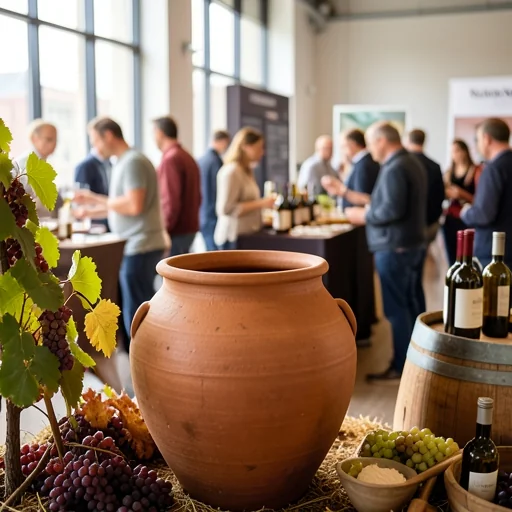
The story begins in the vineyard and continues at trade fairs. On one side there is the daily practice of a small Georgian winery, on the other the international showcase trying to bring those wines to foreign markets. Qvevri winemaking, native grape varieties and concrete figures on the market opening up in Berlin show how Georgian wine producers like Ambokhi can turn their quality into commercial opportunities.
Why Georgian wine interests importers and sommeliers
The reasons that attract European professionals stem from the method and the grape varieties. Georgia preserves the practice of fermenting in qvevri, the buried terracotta amphora, which is at the heart of the identity of Georgian wine and appeals to sommeliers and restaurateurs seeking technical authenticity and variety. The qvevri is the traditional technology that defines many Georgian wines.
Commercial curiosity grows when the offer is gathered and visible. On November 28 in Berlin there will be a fair that brings many producers and operators together. On November 28 Amber Georgia brings together 70 producers and more than 200 wines. The organizers believe this concentration will facilitate meetings with importers, restaurateurs and journalists. The aim is to turn interest into concrete contacts.
The qvevri explains technically what people look for in Georgian wines, but it alone does not guarantee production consistency.
That consistency requires information importers seek: production size, grape varieties, fermentation practices and logistical availability. Those evaluating suppliers want to know if the producer has 10,000 bottles a year. Evaluators also want to know if the producer works in multiple styles and whether they can negotiate with distributors on certifications and packaging.
From the vineyard to the qvevri: practices, wines and limits of a small producer
An operational example is the Ambokhi winery, founded by Salome Jaliashvili and her husband Beso Jakhua. Their first harvest at their urban facility took place in 2024, and today their production reaches about 10,000 bottles per year. Ambokhi produces white and red wines both in qvevri and in stainless steel and barrique.
Ambokhi cultivates Ojaleshi and Saperavi vineyards in Samegrelo and Kakheti, and purchases grapes for varieties such as Tsolikouri, Krakhuna, Aladasturi and Rkatsiteli. The winery is already in its third harvest for its first batches. The winery has created a service that receives grapes from third parties to produce wine on a contract basis. These practices show the production versatility that weighs on an importer’s commercial choice.
Reality, however, presents practical obstacles. Ambokhi reports the absence of local bottle production. Ambokhi says this increases final costs. Ambokhi adds that fees for certificates destined for domestic and foreign markets worsen the accounts of small producers. The lack of local bottles and the new fees are a brake on margins. For importers it is crucial to know these constraints, because they impact the sale price and the continuity of supplies.
Festival, market and what the system still needs to solve
Amber Georgia 2026 is structured to overcome three problems: visibility, commercial contacts and education on the viticultural heritage. The event becomes smart when it brings small wineries and buyers face to face: the formula planned in Berlin was designed to allow operators to hear directly from producers about their vineyards, local grape varieties and winemaking methods. A fair is useful only if it puts producers and importers face to face.
Organizers state that the first edition in New York had involved 32 producers. They claim that the Berlin edition grows to 70 producers and more than 200 wines presented in the same space. This dimensional leap increases the chances of entry into foreign markets, but does not eliminate the logistical and regulatory limits small producers talk about. The commercial opportunity therefore depends on how follow-ups and post-event contracts are managed.
The fair expands visibility, but commercial sustainability depends on certifications, packaging and export costs.
To turn a tasting into a regular flow of goods, internal infrastructures are also needed. Ambokhi plans to install a laboratory to check chemical parameters on site and to expand tanks and qvevri to increase production capacity. Meanwhile it has created an ethnographic corner for wine tourism, leveraging the 8,000-year history of Georgian viticulture to give context to the wines. The integration between technical quality and the tourism narrative is a lever to consolidate commercial relationships.
The next step opens two scenarios. Either the international market organizers continue to facilitate direct contacts and logistical services, or many producers will remain dependent on sporadic sales. For importers and restaurateurs the choice is clear: evaluate producers who demonstrate verifiable production capacity, on-site quality control and logistical strategies to supply the European channel regularly.
Sources: