
Qvevri and tradition
Georgian wine: a complete guide to qvevri, grapes and regions
What Georgian wine is, how it is made in qvevri, which native grapes to taste and where to start discovering it in Italy.
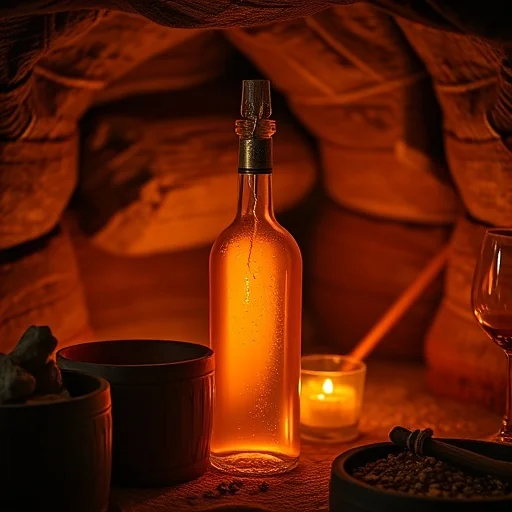
In a marani in Kakheti, the Georgian family cellar, the floor is a row of round lids sealed flush with the ground. Beneath each one rests a large buried terracotta jar, the qvevri, filled with wine that ferments and matures slowly. For anyone who knows Italian skin-contact wines but not the Georgian names, this is where to start understanding Georgian wine: an ancient method, hundreds of native grape varieties and regions that use the same jar in different ways.
Qvevri, the jar that gets buried
The qvevri is an egg-shaped, handcrafted terracotta vessel used to make, mature and store wine. According to UNESCO, after pressing, the must, skins, stems and seeds are poured into the jar; the jar is sealed and buried, and the wine ferments for five to six months before being drunk. In 2013 UNESCO inscribed the method on the Representative List of the Intangible Cultural Heritage of Humanity. It describes it as an inseparable part of the cultural identity of Georgian communities.
The knowledge passes down within families: children learn by tending the vines, pressing the grapes, collecting the clay and watching their elders build and fire the jars. According to UNESCO, most farmers and city dwellers still use this method, and the cellar is still considered the most sacred place in the house. Modern qvevri range from 50 to 3,500 litres, according to the WSET: the smaller jars are normally used for fermentation, the larger ones for storage.
Eight thousand years of evidence, not of qvevri
Analysis of organic compounds absorbed into pottery from two Early Neolithic sites in Georgia has provided the oldest biomolecular evidence of grape wine in the Near East, dating to around 6000-5800 BC. The study, published in PNAS in 2017, describes large jars, among the first types of pottery made in the region, probably used together for fermentation, maturation and serving. The evidence also includes grape pollen, starch and remains of grape skins associated with a jar of the same type and period. Those Neolithic jars were not buried qvevri: the study documents the wine, not the method that has come down to the present day.
Native grape varieties: hundreds of names, few known
According to Lasha Tsatava, the first Georgian to earn the WSET Diploma, writing for the WSET, Georgia has more than 500 native grape varieties. About 45 of them are used in commercial viticulture today and about 20-25 reach export markets. Roughly 75% are white grapes and 25% black grapes. Rkatsiteli is, again according to Tsatava, the most planted white variety in the country. Saperavi is the most widespread red grape in Kakheti, according to the Georgian National Wine Agency, and is made into qvevri wines, European-style wines, rosés and sparkling wines.
A scientific review in Frontiers in Plant Science places Georgian germplasm in a genetic group distinct from the European one. The authors find rich diversity in many traits, including resistance to pathogens such as oomycetes and phytoplasmas and to stresses such as sunburn. For this reason they see Georgian grape varieties as a resource for breeding programmes in a changing climate.
Kakheti and Imereti: two regions, two ways of using the jar
Kakheti, in the east, is Georgia’s main wine region. According to the National Wine Agency, it covers more than 70% of the country’s vineyard area and 93% of its grape harvest. The best vineyards grow in the valleys of the Alazani and Iori rivers, between 400 and 700 metres above sea level. Of the 25 registered appellations of origin in Georgia, 19 are in Kakheti, including Tsinandali, Mukuzani, Kindzmarauli and Manavi. In the traditional Kakhetian method all the pomace and stems are added to the must; the first racking takes place in March, and the wine then matures under control for about a year.
Imereti, in the west, follows a different path. Here the jar is called churi and only a small part of the pomace is added to the must. The wine stays in the churi for about two months, then moves to barrel. According to the Agency, Imeretian wine has a fine yellow colour and is full, harmonious and lively. The main varieties are Tsolikouri, Tsitska and Krakhuna, and the region produces the Sviri and Obcha appellations.
What to expect from an amber wine
For Tsatava, amber wine is what makes Georgia unique. It is made from white grapes fermented in qvevri with their skins, seeds and sometimes stems: the juice stays in contact with the skins during fermentation, and the wine remains on them for a further one to six months. According to the WSET, it is the fastest-growing category in Georgian wine. Less than 10% of Georgian wine, white or red, is made in qvevri, but the style has influenced winemaking around the world.
Tsatava suggests exploring amber wines in three steps. Introductory amber wines are medium-bodied, with more fresh than dried fruit and medium tannins. Full amber wines have more body, more dried-fruit notes and pronounced tannins. “Amber combo” wines ferment and mature in qvevri and then spend time in wood, which softens the tannins.
Where to find it in Italy
Etilika’s “Georgia Ambrata” tasting box brings together three Rkatsiteli wines made in qvevri by three producers in three vintages: Rkatsiteli 2025 from the Monks of Dariali, Rkatsiteli Qvevri 2022 from Raberi and Tsarapi Rkatsiteli Qvevri 2016 from Nagdi Marani. According to Etilika’s product page, the three wines are meant to be tasted side by side, to compare how different producers and vintages interpret the same grape. Full details are on the Georgia Ambrata box page.
Sources:
- Intangible Cultural Heritage | ich.unesco.org
- McGovern et al. (2017), “Early Neolithic wine of Georgia in the… | pmc.ncbi.nlm.nih.gov”
- Sargolzaei et al. (2021), “Georgian Grapevine Cultivars: Ancient… | pmc.ncbi.nlm.nih.gov”
- WSET (Lasha Tsatava DipWSET), “Exploring Georgian wine: history… | wsetglobal.com”
- ღვინის ეროვნული სააგენტო (National Wine Agency of Georgia)… | wine.gov.ge
- National Wine Agency of Georgia, sito ufficiale giapponese, カヘティ地方… | georgianwine.jp
- Etilika, Box Degustazione “Georgia Ambrata” [3 bottiglie] | etilika.it