
Wineries
Garnet Valley wines: Comparing Solvero and Haywire styles
The growing attention toward Canadian wines today focuses on a specific valley: Garnet Valley in the Summerland district of the Okanagan.
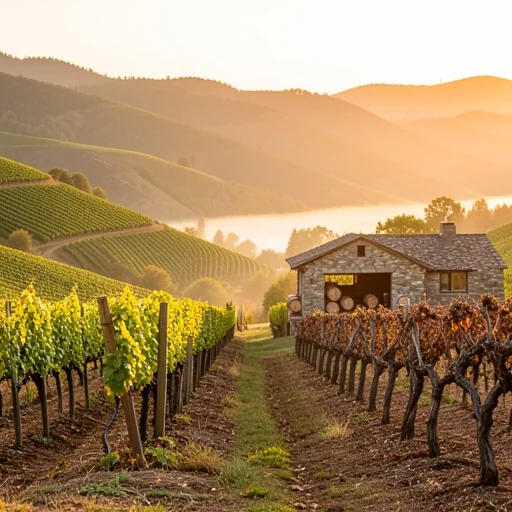
The growing attention toward Canadian wines today focuses on a specific valley: Garnet Valley in the Summerland district of the Okanagan. Here an emerging project, Solvero, and an established operation, Haywire, face each other. The comparison yields useful guidance for importers, servers and buyers who select wines carefully. Territories, vineyard and cellar choices and the result in bottle show what these practices guarantee, and what they do not.
This comparison guides importers, servers and buyers.
A mountain of choices: altitude, rootstocks and clonal material determine the profile
Garnet Valley is characterized by vineyards around 600 meters elevation on steep soils. Altitude influences ripening, acidity and the finesse of the fruit. Solvero has a 30-acre site with 16 acres under vine. The estate planted seven Pinot Noir clones in 2016 and two Chardonnay clones in 2017. The clonal material indicates which vine clones were chosen to suit the microclimate. Haywire planted its vineyard in the same valley in 2014 and manages the vines carefully after known frost events in the area.
For terminological clarity, rootstocks are the roots onto which the vine is grafted. Rootstocks are fundamental for resistance and vigor. Clonal material defines the clonal variety used for the canes. Élevage is the period of growth and refinement of the wine in the cellar. Aging can occur in wood, steel or concrete. Choices on these three elements shape structure, acidity and perceived minerality in the wines produced in the valley.
The choice of rootstock, clones and élevage conditions the structure and acidity of the wine.
Altitude controls ripening, acidity and fruit finesse.
Rootstocks determine resistance and vine vigor.
Two cellar routes that lead to the same end: purity, precision and clear differences in Canadian wines
Solvero favors a more traditional approach to white wine aging. The 2023 Pinot Gris matures 50% in wood and 50% in steel. It shows 13.4% alcohol and is described as bright and crystalline. This wine received a 92-point score. Its 2022 Chardonnay ferments in barrel with 16% new wood. It reaches 13.5% alcohol and was rated 95 points. Haywire, conversely, practices low intervention in the cellar. It prefers élevage in concrete to preserve freshness and clarity. Its Garnet Valley Ranch Chardonnay 2022 from 600 meters was judged 94 points.
This diversity shows that a wine can be aged in wood or concrete and still be precise. The method does not replace the terroir but modulates it. For buyers and selectors, the practical takeaway is clear: élevage choices translate into texture, not necessarily into higher quality per se.
Élevage choices translate into texture rather than quality.
Pinot Noir, Gamay and the contrast of approaches that matter to importers and sommeliers
Pinot Noir is the common thread for both cellars. The Solvero Pinot Noir 2020 comes from seven clones and reaches 13% alcohol. The wine is juicy, light but full and scored 94 points. The Solvero 2021 shows ripe cherry characters and herbaceous notes and was rated 93 points. Haywire offers a Garnet Valley Ranch Pinot Noir 2022 primarily from clone 828 with 50% whole-cluster fermentation. It presents cherry and plum with a saline edge and earned 94 points.
Gamay has a place in both projects. Solvero added it to the plantings. Haywire offers a 2022 Gamay with 75% whole-cluster fermentation and also a 2022 rosé version that collected 91 points. For importers, the operational message is straightforward. Garnet Valley produces fruit suited to different styles. The choice between Solvero and Haywire depends on the desire for backbone, fruit fragments and winemaking techniques.
Garnet Valley produces fruit suited to different styles.
Pinot Noir is the common thread between both cellars.
What the method does not guarantee and what remains to be verified
The comparison demonstrates that using concrete or wood does not automatically guarantee a “natural” style. The percentage of whole clusters and clone selection do not guarantee a specific aromatic intensity. These elements, rather, guarantee process coherence and repeatable results. Practical questions for importers remain open. It is uncertain how these vineyards will react to future extreme climatic events. It is uncertain how the wines will evolve in bottle on the European market in the medium term. The coming seasons will provide useful information. Decisions on rootstocks and soil management will deliver operational answers.
Concrete or wood do not guarantee a natural wine style.
Sources: