
Market and export
Bordeaux wine crisis: reference prices, protests and appeal
Reference prices for organic Bordeaux wines, protests by the Coordination Rurale in Béziers and the appeal of the CIVB lawsuit mark the wine crisis.
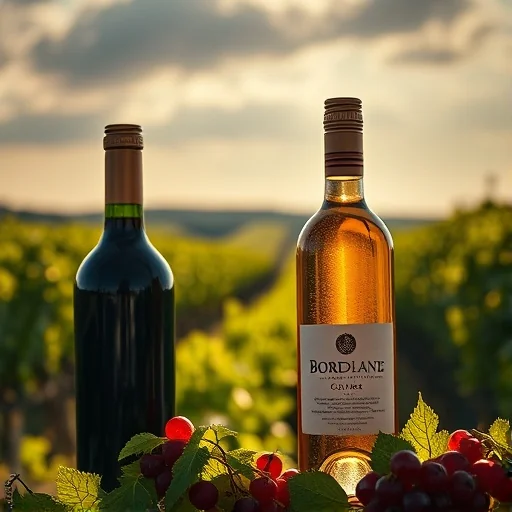
On 2 November 2026 the European Commission validated the application of Article 210 bis of EU Regulation No 1308/2013 to AOC Bordeaux wines in bulk from the 2026 vintage, announcing reference prices for certified organic and Haute Valeur Environnementale wines. On 3 November, winegrowers from the Coordination Rurale blocked access to the Dionysud trade show in Béziers with tractors. The same day in Bordeaux, the appeal hearing took place in the lawsuit between the CIVB and the association Alerte Aux Toxiques. A wine crisis touches prices, procedures and health.
Sustainability agreements: reference prices for organic and HVE Bordeaux
The sustainability agreement derogates from competition law and sets indicative prices for bulk wine. Interbio Nouvelle-Aquitaine and the Chambre d’Agriculture de la Gironde wanted it. The Gironde négociants gathered in Bordeaux Négoce did not. The CIVB interprofessional body rejected it. The reference prices start at 2,000 euros per tonneau for organic Bordeaux red and white. The reference yield is 50 hl/ha for red and 55 for white. For HVE, the reference stands at 1,513 euros per tonneau in red, rising to 1,829 in the most realistic case of a yield of 40.9 hl/ha.
They are optional and purely incentive-based indicators. Interbio and the Chambre d’Agriculture present them as a common benchmark for producers and buyers. The tool is designed to cover production costs and avoid selling sustainably certified wines at a loss. The initiative has the support of Vignerons Bio Nouvelle-Aquitaine, Vignerons Indépendants and CER France Gironde, who call it a first for the Bordeaux industry.
The comparison with actual market prices explains why it was needed. From 19 October to 1 November, Bordeaux red traded at an average of 813 euros per tonneau, with 60% of volumes below 799 euros. In the 2025-2026 campaign, conventional red had sold at 877 euros and organic at 1,453 euros. The sustainability agreements set reference levels well above observed prices, and the challenge now shifts to courtiers, négoce and large retailers. The tool has a precedent: it has already been applied to Pays d’Oc IGP organic wines, which renewed it for the 2026-2027 campaign.
The CIVB’s reference price divides the industry
On 20 October the CIVB had announced its own reference price for Bordeaux red in bulk, based however on Article 172 ter: 1,100 euros per tonneau, the result of a 50/50 average between the average price of the 2025-2026 campaign and the average production cost of 1,320 euros, calculated over the last four campaigns on a sample of one hundred estates. A compromise solution, its authors maintain, chosen so as not to close the market and preserve interprofessional unity. In the Gironde industry, however, the announcement of a price below production costs divided opinion.
The two reference prices, the Article 210 bis one from Interbio and the Chambre d’Agriculture and the Article 172 ter one from the CIVB, will run in parallel, each declaring itself complementary to the other. Both share the same stated goal: triggering a rise in bulk prices, which have fallen campaign after campaign. A debate on the topic was held on 2 November at the Vinitech show in Bordeaux.
In Béziers, the Coordination Rurale protests against the wine crisis
On Tuesday 3 November the Coordination Rurale de l’Hérault opened the day with a slow tractor march. It lined up tractors and utility vehicles in front of the exhibition centre in Béziers, where the Dionysud show hosts 149 exhibitors. Co-chair Benjamin Bajada disputes the “bluff effect” of government announcements: the cents of aid on diesel require going through complex platforms, and payments have not arrived since June. The association is calling for a tax holiday on land not designated for building, a deferral of bank loans and administrative simplification. For the other co-chair, Laurent Crouzet, cyclical aid is just scattering: what is needed are structural aids, not cyclical sprinkling. One winegrower notes that 17 euros per hectolitre are missing compared with the price in the sustainability agreement of Pays d’Oc IGP, calculated on yields nobody achieves.
The protesters appealed to Jérôme Despey, president of the Chambre d’Agriculture de l’Hérault and first vice-president of the FNSEA. Despey defends the price tunnel voted into the agricultural emergency law in the summer. Under it, no hectolitre may be sold below production cost when an interprofessional body requests it. Despey rejects the idea of the lowest possible minimum price. He admits the tug-of-war with the négoce and acknowledges he is not a minister. The concrete demand is a suspension of bank loan repayments. With wine-sector debt running at 80%, piling loans on loans is no longer possible. On the substance, his appeal is to union unity: do not fight the wrong battle among winegrowers.
The mayor of Béziers, Robert Ménard, inaugurated the show and pushed responsibility up to the national level. He said: “there are no answers here”. The State has no money and the government has no majority in the Assembly. His line on the future of the crisis: “there will be solutions to the wine crisis when hens have teeth”. On the ground, he notes that a tractor costs 100,000 euros and that the price of wine is the same as in the 1990s.
The CIVB vs Alerte Aux Toxiques lawsuit reaches appeal
On 3 November the court of appeal examined the appeal by Valérie Murat and the association Alerte Aux Toxiques. The two had been convicted at first instance for denigrating Bordeaux wines. The conviction followed a communication on the use of pesticides. Murat speaks of six years of waiting and a sum to be raised that rose to 161,034 euros with costs and advertising, against an association with a budget of 2,000 euros and a CIVB with a budget of 22.8 million in 2026, down 14% in one year. Lawyer Bruno Bouyer defends the classification of his client’s words as free expression. The European coalition against gag lawsuits (procès-bâillon) (Case) is expected to rank this conviction as the heaviest in Europe. The defence line remains reclassification as defamation, because the information would concern public health and occupational health, and therefore the general interest. The appeal ruling will tell whether critical speech about Bordeaux will be protected or condemned once again.
Sources:
- Pour Robert Ménard “il n’y aura de solutions à la crise viticole… | vitisphere.com”
- “Le CIVB cherche des coupables à la crise que traversent les vins… | vitisphere.com”
- La Coordination Rurale apostrophe Jérôme Despey qui appelle à… | vitisphere.com
- Pas de vins de Bordeaux durables à moins de 1 500 €/tonneau en HVE… | vitisphere.com