Regions and grapes
Agronomic challenges in Bordeaux: soil nutrition and economic tools
Only then can the current agronomic challenges be transformed into a shared project of adaptation and innovation.
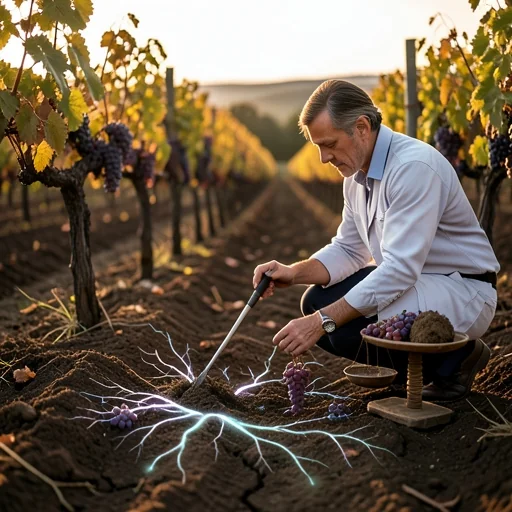
The wine sector of Bordeaux is undergoing a period of profound transformation, marked by complex agronomic challenges that intersect with increasing economic pressure. This situation directly affects the sustainability of estates and the quality of the final product, with significant repercussions for importers, distributors and sommeliers. The current debate focuses on how to address these issues to secure the future of one of the most famous wine regions in the world.
The sustainability of estates is seriously compromised.
When soil nutrition meets wine quality
Agronomic analyses carried out by TerraMea, a subsidiary of the Dubernet laboratories, reveal that the vines of Bordeaux suffer from significant nutritional deficiencies. Since 2021, average yields have fallen substantially, dropping below 40 hectolitres per hectare (hl/ha) across all appellations. In the prestigious Pomerol area, for example, average values now barely reach 30 hl/ha. This decline is not an isolated datum but reflects a broader problem that directly influences the availability and concentration of wines, a core aspect of the agronomic challenges in the region.
It is essential to listen to the technicians to protect the vineyard.
The vines show a shortage of nitrogen, with insufficient reserves in woody tissues in autumn and levels that are too low in the petioles in spring. Nitrogen is crucial for vegetative growth, berry development and the elongation of the rachis, as well as being an essential component of musts. Nitrogen deficiency compromises productive capacity. Its lack slows the plant’s development cycle and undermines its productive potential. At the same time, low iron levels are detected, even without visible symptoms, which can cause dysfunctions in the plant. Experts recommend foliar iron applications, effective as early as four or five fully expanded leaves and after harvest, without risks of toxicity.
The agronomic challenges and the price of survival
The precarious agronomic context is set against an economic crisis that is putting vignerons under severe strain. In recent years, the Bordeaux region has lost 30,000 hectares of vineyard, an area comparable to the entire Burgundy. Behind this number lie many estates that have ceased operations, including young vignerons who found themselves unable to make a decent living from their work. Exhaustion and discouragement are palpable, aggravated by an unstable global market, which accounts for half of Bordeaux’s sales, and an uncertain domestic political environment.
The region has lost 30,000 hectares of vineyard.
The 2025–2026 campaign saw the average price of a barrel of Bordeaux red stand at 900 euros. This value, 877 euros for conventional and 1,453 euros for organic, is often insufficient to cover rising production costs. The average price does not cover production costs. The gap does not reflect a fair distribution of margins along the supply chain. The reluctance of many Bordeaux producers to integrate nitrogen, for fear of compromising polyphenolic concentration and thus perceived quality, is understandable. However, this hesitation, if not offset by adequate economic support, contributes to falling yields and makes it difficult to tackle the documented nutritional deficiencies.
Economic tools to support agricultural practices
To address this imbalance, Bordeaux’s interprofessional body is working on implementing new economic tools. Article 172 ter, for example, aims to define indicative prices for Protected Designation of Origin (AOP) appellations. This tool, under negotiation with the Bordeaux wine interprofessional (CIVB), has already reached consensus for the regional appellation. The objective is to offer greater security to producers, allowing them to better plan investments in agronomic practices.
Article 172 ter defines indicative prices.
Another fundamental piece is the development of Producer Organizations (OP), whose establishment is expected by decree. In Bordeaux, 1,400–1,500 operators face only five large retail buyers, who hold 70% of the domestic market. This negotiating asymmetry exposes vignerons to unfavorable conditions. OPs would allow producers to group together and acquire greater bargaining power, ensuring fairer remuneration. Only in this way will vignerons be able to finance essential technical interventions, such as the nitrogen and iron applications recommended by agronomists to address the agronomic challenges.
OPs would increase producers’ bargaining power.
Toward a more resilient future for the Bordeaux vineyard
It is essential that vignerons have the opportunity to implement the necessary agronomic corrections without these translating into a worsening of their economic situation. The fear of compromising wine quality, particularly polyphenolic concentration, is a legitimate concern that has slowed the adoption of solutions such as nitrogen supplementation. However, the documented deficiencies of nitrogen and iron are a direct cause of yield decline and must be addressed with targeted protocols that balance quality and quantity at every stage of the vegetative cycle.
Nitrogen and iron deficiencies reduce yields.
For importers and restaurateurs, this means seeking partners who adopt transparent practices, willing to share analyses and management plans. On the institutional front, crucial questions remain open, such as water resource management and the creation of irrigation infrastructure, increasingly urgent in the face of a deregulated climate. Effectively linking agronomic data, commercial agreements and collective investments is the key. Decision-makers must listen to the technicians. If Bordeaux wants to maintain its status as a reliable source of quality wines for the international market, it is essential that decision-makers listen to the technicians and that producers have the contractual tools to support interventions. Only then can the current agronomic challenges be transformed into a shared project of adaptation and innovation.
Sources: