
Wineries
Agrida: two rare grapes from Kakheti
Agrida, a winery in Shilda in Kakheti, and its two qvevri whites from rare grapes: Kisi, which almost disappeared by 2000, and Khikhvi.
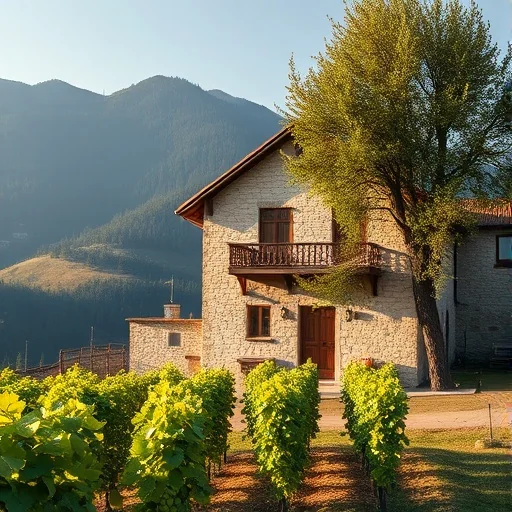
In Shilda, a village in the municipality of Kvareli in Kakheti, the great wine region of eastern Georgia, the Agrida winery keeps a room dedicated to qvevri, the large terracotta jars buried in the ground in which wine is made in Georgia. According to the producer it holds qvevri of different sizes, with a capacity of 120 tonnes. Those jars also produce two whites from grapes that were barely grown in Georgia in 2004: Kisi and Khikhvi. For anyone who knows Italian skin-contact wines, Agrida’s wines are a concrete way to taste two rare varieties from Kakheti.
A young winery in the Kindzmarauli microzone
Agrida is a recent winery. According to the producer’s website it was founded in 2018 in Shilda, on a site chosen for the characteristics of the Kindzmarauli microzone. The winery covers 42,000 square metres and owns 56 hectares of Saperavi and Rkatsiteli vineyards, plus a small collection plot with five varieties. The producer describes the vineyard soils as thin, very gravelly, alluvial and proluvial.
Agrida says it works with many Georgian grapes, including Rkatsiteli, Mtsvane Kakhuri, Kisi, Khikhvi, Tsitska, Tsolikouri, Saperavi, Aleksandrouli and Mujuretuli. It makes wine both in the European style and with the traditional Georgian method, and also produces two types of chacha, the spirit the producer calls “wine vodka”, and three brandies: more than 25 products in all. Alongside the qvevri, the website lists an underground cellar 7 metres deep and a room with 150 oak barrels.
Kisi, a grape that almost disappeared
Kisi is a white grape native to Kakheti. According to the National Wine Agency, Georgia’s national wine authority, by 2000 Kisi had almost disappeared. The agency attributes this to the Soviet-era preference for Rkatsiteli and to the decline of Georgian vineyards after the collapse of the Soviet Union, and adds that Kisi is somewhat harder to grow. In 2004 there were 20 hectares, all on family farms, 18 of them in the Akhmeta district. In the Telavi district, 50- to 60-year-old vines survive and new ones are being planted.
The agency describes a late-budding grape that ripens before Rkatsiteli, usually in the last two weeks of September. Made in the European style it gives a straw-coloured, floral wine with flavours of pear, citrus and green tea; in amber qvevri wines apricot, mango, lime, orange and walnut come through. According to the agency, some producers believe Kisi can make finer, more expressive wines than Rkatsiteli.
Khikhvi, one hectare in 2004
The origin of Khikhvi’s name is unknown, the National Wine Agency explains. The grape was born in Kakheti, and most plantings are in the south-east of the region, on the right bank of the Alazani river; it also grows in Kartli. In 2004, according to the agency, only one hectare was in production in the whole of Georgia.
It is an early-ripening grape, harvested in September, which the agency recommends for higher, cooler vineyards. Its aromatic profile is distinctive: floral notes of boxwood and wildflowers over ripe yellow fruit and apricot. In qvevri versions, the agency writes, dried fruit and flowers come through more. It has moderate alcohol and soft acidity, and according to the agency it is a grape that deserves more attention.
Agrida’s two qvevri whites
These are notes on individual wines, not on the grapes. On its website Agrida describes its qvevri Kisi without giving a vintage: grapes from villages in the Akhmeta municipality, an amber colour, a sweet scent of candied nuts and sweet spices, pleasant tannins, 12% abv and a serving temperature of 14-16 degrees. Its qvevri Khikhvi, again according to the producer, has an amber tint, pronounced varietal aromas, dried tropical fruit, soft tannins and a finish of dried apricot.
Etilika’s product sheets cover the 2019 vintage. The Kisi Qvevri 2019 is a single-variety Kisi, made and aged in qvevri: the sheet lists dried apricot, peach, ripe stone fruit and chamomile, with a tannic presence, and reports a bronze medal at IWSC Georgia 2024 with 87/100. The award applies to this wine, not to the grape.
The Khikhvi Qvevri 2019 comes from Kakheti vineyards between 450 and 550 metres, on sandy loam soils with alluvial clays. According to the Etilika sheet the grapes are picked by hand and ferment and age in qvevri; the wine has 12% abv and is made without added sulphites.
Where to find it in Italy
According to the Etilika sheet, the Kisi Qvevri Bianco 2019 from Agrida is a dry white from Kakheti made from Kisi alone and aged in qvevri; the same catalogue lists the Khikhvi Qvevri Bianco 2019. The Georgia Segreta box brings together Agrida’s two whites and the 2025 Ojaleshi from Ninos Marani, to taste the two rare grapes from the same vintage side by side.
Sources:
- Winery Agrida (sito ufficiale del produttore): About us, Winery… | wineryagrida.ge
- Winery Agrida (sito ufficiale): schede Kisi Kvevri e Khikhvi Kvevri… | wineryagrida.ge
- National Wine Agency of Georgia: schede ufficiali dei vitigni… | wine.gov.ge
- Etilika: Kisi Qvevri Bianco Georgia 2019 - Agrida (scheda prodotto) | etilika.it
- Etilika: Khikhvi Qvevri Bianco Georgia 2019 - Agrida (scheda prodotto) | etilika.it
- Etilika: Box Degustazione “Georgia Segreta” (3 bottiglie): Kisi… | etilika.it