
Regions and grapes
Adapting vineyards to climate change to preserve wine freshness
Adapting vineyards is imperative to safeguard wine quality . The wine sector is undergoing a profound transformation. This is driven by climate change.
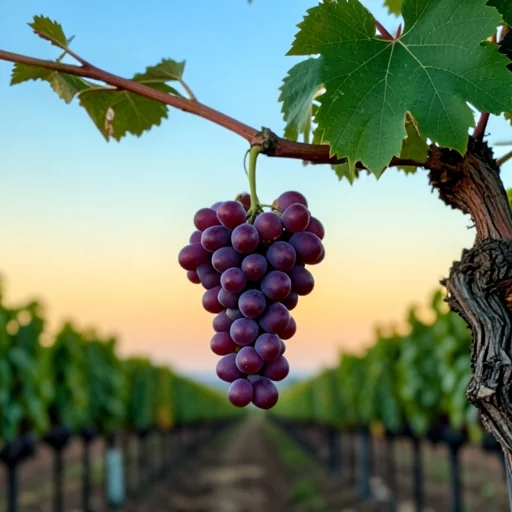
The wine sector is undergoing a profound transformation. This is driven by climate change. The phenomenon not only alters average temperatures. It brings forward the vine’s natural cycles and upsets production balances. Adapting vineyards is imperative to safeguard wine quality. We must rethink both agronomic and cellar practices.
The wine sector is undergoing a profound transformation.
The Advancement of Cycles and New Vulnerabilities
Rising global temperatures accelerate vine phenology. This means its development cycles are faster. Early budbreak is common in many areas. It exposes the plant to a higher risk of late frosts. Frost frequency has not changed. However, the vine is more vulnerable when frosts occur. Managing the agricultural year becomes more complex. This can cause cold damage, even with generally higher temperatures.
In Gascogne, France, the consequences are already evident this year. Harvests of the earliest Sauvignon Blancs began on 6 August. This earliness is unprecedented. Picking continued from 10 August for Sauvignon and Chardonnay. Merlot for rosés were ready on 14 August. This advancement of about ten days is significant. Harvest timing has shifted by about ten days. Agricultural planning requires a necessary review. Traditionally, harvest begins in the second half of August.
The region experienced five heat waves this year. The vines showed good resilience. Only those on shallow soils or the youngest suffered. The impact on the production cycle is undeniable. Growers faced accelerated ripening. This compressed harvesting times. Harvest windows are now significantly compressed. For 1,500 hectares of the Val de Gascogne cooperative, the harvest lasted one month. Previously it lasted one and a half months.
The Challenge of Chemical Balances and the Demand for Freshness
Earlier ripening creates another problem. There is a mismatch between technological and aromatic ripeness in whites. In reds, the mismatch is between alcohol and phenolic maturity. For white wines and sparkling bases, ripening is too rapid. Identifying the optimal moment for harvest is crucial. Reds can have a high alcohol level. However, phenolic maturity may not be complete. This leads to less balanced and less fresh wines.
Market demands complicate this challenge. Over the last twenty years, consumers have preferred simpler wines. They want fresher wines, with higher acidity and lower alcohol. This trend clashes with warmer climates. They produce more structured and alcoholic wines. In Gascogne, controls showed an almost disappearance of malic acid. For some Merlot, it fell to 0.75 grams per liter.
Low pH levels have been observed, below 3. Tartaric acid levels were high, up to 10 grams per liter. This is due to the concentrating effect of heat. Producers must act promptly to preserve freshness. They must anticipate acidity corrections on musts. They also use yeasts with acidifying characteristics. Ripeness monitoring is fundamental. It is needed to avoid losing freshness balance, especially for whites and rosés.
Innovative Strategies for a Vineyard Resilient to climate change
Responses to these changes cannot be superficial. Moving vineyards to higher elevations is an option. However, it requires case-by-case assessments. It is not a general rule. It involves checking soils and accessibility. There are also higher working costs. In some territories, space is limited. A new high-altitude planting requires long timeframes. In Gubbio, converting pastures at 800 meters took 4–5 years. This was only to control frost risk. The whole process can last ten years. High-altitude conversion can take a decade. Such a long investment is not sustainable for all businesses.
Adaptation requires agronomic and genetic strategies. Techniques can be used to delay vegetative recovery. Not all varieties are suitable, and great precision is needed. Another path is the search for new rootstocks. Plants resistant to drought are sought. Or plants that slow phenology are sought. The goal is to maintain the desired variety. Assisted Evolution Techniques (AET) introduce specific traits. These include lateness or drought resistance. AET maintain the enological potential of traditional grape varieties.
Resistant grape varieties (PIWI) are becoming more popular. In Franciacorta, different varieties are being evaluated. They could be used in small percentages for sparkling wines. This would reduce treatments and the risk of drift. There is a commercial difficulty. Consumers prefer traditional varieties. The introduction of low- or no-alcohol wines is a new frontier. It opens new markets. But the challenges are notable. The energy costs of dealcoholization are high.
Unity and Recognizability for the Future of Wine
Viticulture is living through a complex moment. There is climatic instability and shrinking consumption. This scenario calls for deep reflection. A systemic approach is needed.
Many seek individual solutions, but the need for a collective response is clear.
Companies can compete. However, they must recognize a minimum common denominator. This allows a territory to maintain its identity. The territory must be understood by the consumer.
Extreme forecasts suggest a reduction in vocation. This concerns the warmer Mediterranean areas. But it is hard to imagine the disappearance of historic territories.
Tradition, in reality, is made of continuous change, and identity cannot be an unmoving vision.
The average quality of wines has improved. This is thanks to greater skills and management tools. This happens even in difficult environmental conditions.
Confidence in the capacity to adapt is evident. In Gascogne, there were heat waves. Despite this, there is optimism. People believe they can produce the usual fresh profiles. This shows the importance of research. Agronomic innovation is crucial for the future of wine. With a shared vision, the sector can face climate change. It can continue to express the uniqueness of grape variety and territory.
Sources: